
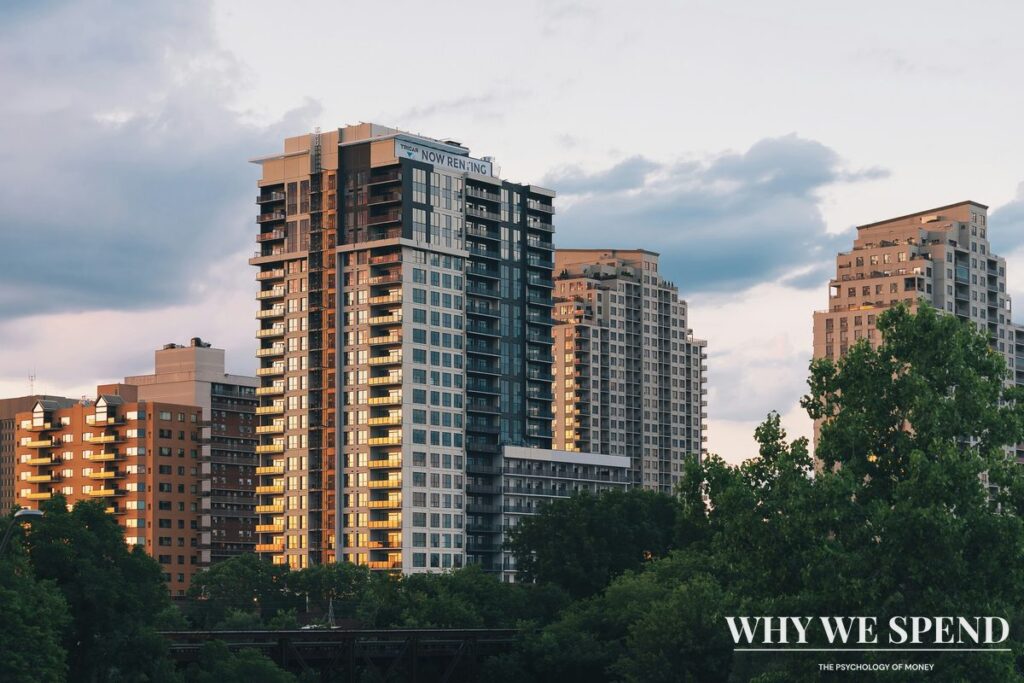
Property spending psychology has turned ordinary home buyers into amateur institutional investors, competing in a market designed for billion-dollar funds. In Singapore, a young couple stretches their budget to secure a $1.2 million resale flat, not because they need the extra room, but because “property always goes up”. In Kuala Lumpur, a 30-year-old professional buys a second condo unit whilst still renting out the first at a loss, convinced she’s building a property empire. Meanwhile, actual institutional investors—pension funds, REITs, and sovereign wealth funds—operate with strategies, timelines, and risk buffers that individual buyers simply don’t possess.
The gap between how people think they’re investing and what they’re actually doing has created a dangerous shift in property spending psychology. What was once a decision about shelter has transformed into a high-stakes game where everyday buyers believe they must think, act, and spend like institutions—without the institutions’ resources, expertise, or safety nets.
The Institutional Investor Mindset That Infected Property Spending Psychology

Walk into any kopitiam in Singapore or mamak stall in Malaysia, and the conversation inevitably turns to property. Not about finding a nice place to live, but about capital appreciation, rental yields, and en bloc potential. This shift didn’t happen by accident.
Institutional investors—the big players managing billions—approach property as one asset class among many. They diversify across locations, property types, and risk profiles. They have analysts, market research teams, and decades of data. Most importantly, they have patience and capital reserves to weather downturns.
Somewhere along the way, individual buyers absorbed the language and mindset without the infrastructure. The HDB flat became an “asset”. The starter home became a “stepping stone property”. Living somewhere became “holding an appreciating asset”.
In Singapore, this manifests as buyers prioritising location and future potential over actual livability. A cramped 3-room flat near an MRT station trumps a spacious 4-room flat further out, not because the buyer works in town, but because “the rental demand is stronger”. The property spending psychology has flipped: people choose where to live based on what an imaginary future tenant might want.
Malaysian buyers exhibit similar patterns, loading up on multiple properties in areas where developers promise “the next hot spot”. Iskandar, Forest City, various “new townships”—each promised institutional-level returns to retail buyers who committed their life savings.
When Property Spending Psychology Becomes Competitive Theatre
The competitive element of property spending psychology creates peculiar behaviour. Buyers don’t just want a home; they want to win. Winning means outbidding others, securing the “best” unit, getting in before prices rise further.
This competitive theatre plays out differently across the Causeway. Singapore’s scarcity-driven market transforms every property launch into a battle. Buyers queue overnight for new launches, armed with spreadsheets comparing PSF prices across districts. The fear isn’t just about missing out on a home—it’s about being priced out forever, watching from the sidelines as others build wealth through property.
In Malaysia, where supply often exceeds demand, the competition manifests as a race to accumulate units. The person with two properties feels behind someone with three. Never mind that both might be struggling with negative cash flow from their rentals.
This competitive mindset triggers several psychological traps. The sunk cost fallacy keeps buyers in bad deals because they’ve already “invested so much”. Social proof makes them follow the herd into oversupplied markets. And confirmation bias ensures they only hear the success stories, never the quiet struggles of over-leveraged owners.
The Role of Property Shows and Investment Gurus
Property spending psychology gets amplified by the cottage industry of property investment courses, seminars, and TV shows. These programmes showcase ordinary people building property portfolios, making it seem achievable and necessary.
The message is seductive: “If you’re not using property to build wealth, you’re falling behind.” Never mind that the successful cases often involve timing, luck, or omitted details about inheritance, family support, or pre-existing wealth.
The Psychological Cost of Institutional-Style Property Spending

When people stretch their finances to buy property like institutions whilst living paycheck to paycheck like individuals, the stress accumulates in ways that institutional investors never experience.
A Singaporean couple buying a $1.5 million flat on dual incomes might seem fine on paper. But they’re not just buying shelter—they’re buying into 25-30 years of financial rigidity. Cannot switch careers easily because must service mortgage. Cannot relocate for opportunities because locked into property. Cannot have children without financial anxiety because already stretched thin
Malaysian buyers face different but equally challenging scenarios. Lower entry prices seem manageable until interest rates rise, tenants leave, or oversupply crashes rental rates. That RM500,000 investment condo in Cyberjaya becomes a monthly drain rather than the passive income promised.
The psychological toll isn’t just financial stress. It’s the constant mental gymnastics required to maintain the narrative. When property values stagnate or fall, owners must convince themselves it’s temporary, that they’re still “building wealth”, that the sacrifice is worth it. This cognitive dissonance exhausts people.
How Property Spending Psychology Creates Lifestyle Poverty
The most insidious effect of institutional-style property spending psychology is lifestyle poverty—having assets on paper whilst being cash-poor in reality.
Singaporeans joke about being “asset rich, cash poor”, but it’s not actually funny when it’s your life. Living in a million-dollar flat whilst eating economic bee hoon every day. Owning property whilst unable to afford a proper holiday. Having “wealth” that cannot be accessed without selling the roof over one’s head.
This phenomenon particularly affects the sandwiched generation—those supporting ageing parents whilst trying to build their own financial foundation. The pressure to “get on the property ladder” means compromising current quality of life for theoretical future gains.
In Malaysia, lifestyle poverty looks different but feels similar. Owners of multiple properties eating at mamak stalls exclusively because rental income doesn’t cover the mortgages. Driving old cars because all spare cash flows to property investments that aren’t appreciating as expected.
The Opportunity Cost Nobody Calculates
What makes property spending psychology particularly dangerous is the opportunity cost that gets ignored. Money locked in property cannot compound elsewhere. Time spent managing properties cannot be recovered. Career flexibility sacrificed for mortgage servicing cannot be regained.
A 30-year-old Singaporean who chooses a cheaper rental and invests the difference in a diversified portfolio might end up wealthier than someone who stretches to buy. But this option gets dismissed immediately because “rent is throwing money away”—a mantra so deeply embedded in Asian property spending psychology that questioning it feels heretical.
Practical Lessons: Reclaiming Personal Property Spending Psychology

Breaking free from institutional-style property spending psychology doesn’t mean never buying property. It means making housing decisions based on personal circumstances rather than competitive positioning or institutional investment logic.
Separate Shelter from Investment
The first step is mentally separating where you live from how you invest. A home provides shelter, stability, and lifestyle benefits. These have value even without capital appreciation. If property happens to appreciate, that’s a bonus, not the primary purpose.
For Singaporeans, this might mean choosing the 4-room flat that fits your family over the 3-room flat with better investment potential. For Malaysians, it might mean buying in the area you actually want to live, not where some developer promises future appreciation.
Calculate Real Affordability, Not Maximum Loan
Banks calculate how much they’ll lend you. That’s different from how much you should borrow. Institutional investors use conservative leverage ratios and maintain capital reserves. Individual buyers should too.
A useful principle: if the mortgage plus related housing costs exceed 30% of take-home income, the property is likely too expensive regardless of what the bank approves. This buffer allows for life changes, economic downturns, and actual enjoyment of income.
Factor in Flexibility as a Value
Institutional investors value liquidity and flexibility. Individual buyers should too. That property commitment should be weighed against career mobility, family planning, and life changes.
Questions to ask: How would this purchase affect the ability to switch jobs? To relocate if opportunities arise? To handle unexpected expenses? To support ageing parents? These considerations matter more than PSF comparisons.
Resist Social Comparison
Property spending psychology thrives on comparison. Someone’s always buying bigger, in better locations, or building larger portfolios. None of that matters to personal circumstances.
The colleague who bought three properties might be drowning in debt. The friend who bought early might have had family help. The influencer preaching property wealth might make money from courses, not property. Personal financial decisions should stem from personal financial reality, not competitive positioning.
Accept That Renting Isn’t Failure
Perhaps most importantly, accept that renting is a legitimate housing choice, not a shameful admission of failure. Institutional investors rent properties all the time—to tenants. Those tenants aren’t failures; they’re customers making a different choice.
Renting provides flexibility, predictable costs, and freedom from maintenance hassles. For many life stages and circumstances, it’s the smarter choice. The key is making the choice consciously based on personal factors, not societal pressure.
Moving Forward: Personal Decisions in an Institutional World
Property spending psychology won’t change overnight. Singapore will remain supply-constrained. Malaysia will continue seeing new launches. Property investment seminars will keep promising wealth.
But individual buyers can reclaim personal decision-making by recognising when they’re being influenced by institutional investor logic that doesn’t apply to personal circumstances. The person who stretches to buy isn’t competing with institutional investors—they’re competing with themselves, their future financial flexibility, and their present quality of life.
The goal isn’t to never buy property. It’s to buy property when it makes sense for personal circumstances, not because billionaires and sovereign wealth funds also buy property. They’re playing a different game, with different rules, different resources, and different goals. Trying to play their game with personal finances is how ordinary people end up asset-rich and life-poor, winning a competition nobody actually needed to enter.