
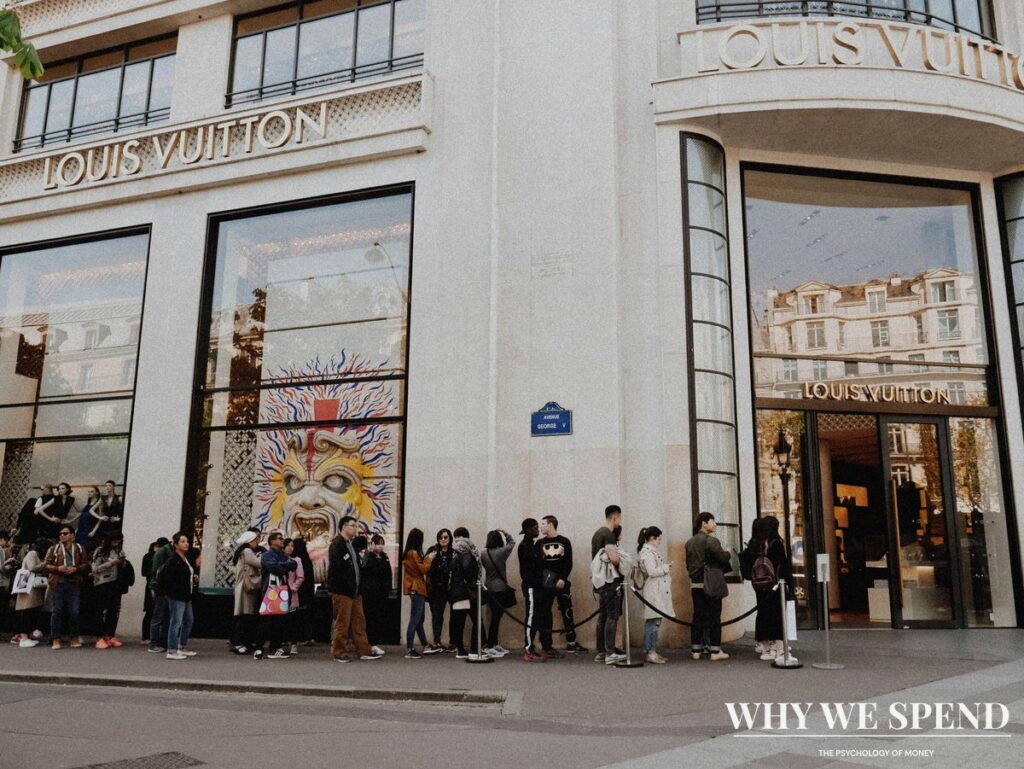
Luxury brand bankruptcy doesn’t stop the queues. When prestigious fashion houses teeter on the edge of financial ruin, something peculiar happens at their boutiques in Orchard Road and Pavilion KL—the queues get longer, not shorter. Shoppers frantically purchase handbags, watches, and accessories from brands haemorrhaging money, sometimes spending their entire month’s salary on a single item. This paradox reveals something uncomfortable about modern spending behaviour: what consumers actually purchase isn’t the product at all.
The phenomenon became glaringly obvious during several high-profile luxury brand restructurings over recent years. As news broke of financial troubles, sales didn’t plummet—they surged. Singaporeans and Malaysians joined global shoppers in panic-buying from distressed luxury labels, creating a fascinating case study in spending psychology that challenges everything we think we know about rational consumer behaviour.
The Scarcity Theatre: When Bankruptcy Becomes Marketing
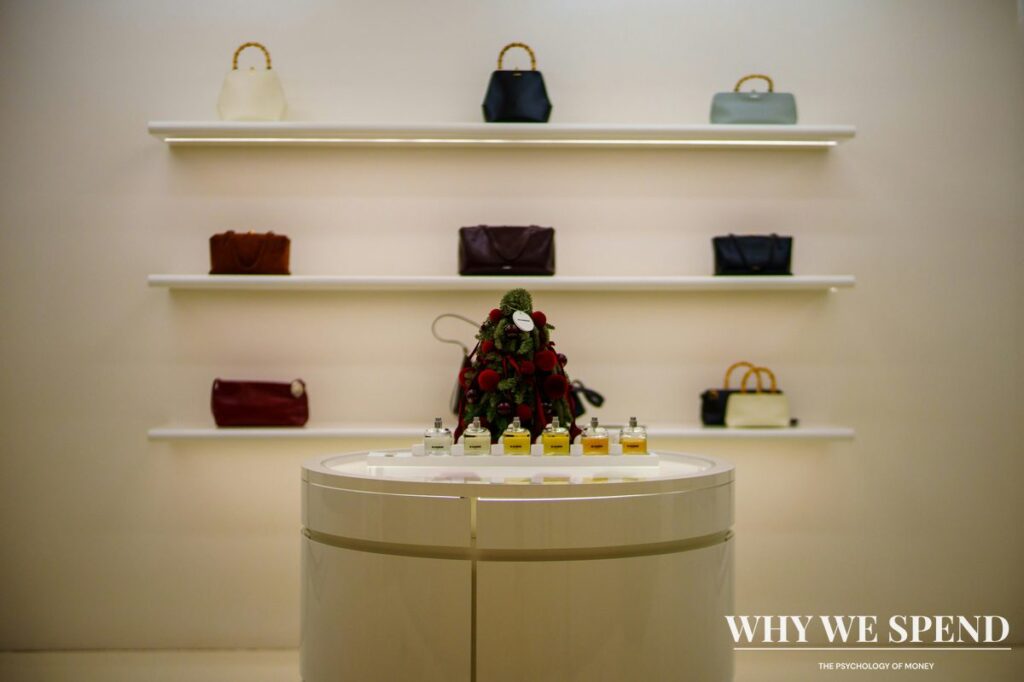
Human brains respond to scarcity with urgency, even manufactured scarcity. When a luxury brand faces bankruptcy, something shifts in the consumer psyche. The possibility of losing access to that brand forever triggers what behavioural economists call loss aversion—the pain of losing something feels roughly twice as powerful as the pleasure of gaining it.
A marketing executive in Singapore who bought three Bottega Veneta bags during the brand’s parent company troubles explained her logic: “If they close, these become collector’s items, right?” This reasoning, whilst common, reveals the true purchase motivation. She wasn’t buying leather goods; she was buying a potential story, a claimed piece of exclusivity before the gates shut forever.
Malaysian shoppers displayed similar patterns during luxury retail restructurings, with some camping overnight outside boutiques for “final collections.” The financial instability of the brand became, perversely, its strongest selling point. Queues outside potentially collapsing luxury retailers looked identical to iPhone launch day crowds—same energy, same urgency, same fear of missing out.
Status in Amber: Preserving Social Currency Before It Devalues
The luxury brand bankruptcy paradox exposes what consumers truly purchase: membership credentials to invisible social clubs. A handbag isn’t a handbag when it costs three months’ rent. It’s a portable signal that broadcasts “I belong to a specific economic class” without speaking a word.
When that signalling system faces extinction, panic sets in. Imagine spending years working toward affording a particular brand, viewing it as a milestone marker of success, only to have that brand potentially disappear. The social validation promised by that purchase suddenly has an expiry date. For many Singaporean and Malaysian professionals aged 25-40, these brands represented delayed gratification goals—the reward for years of grinding.
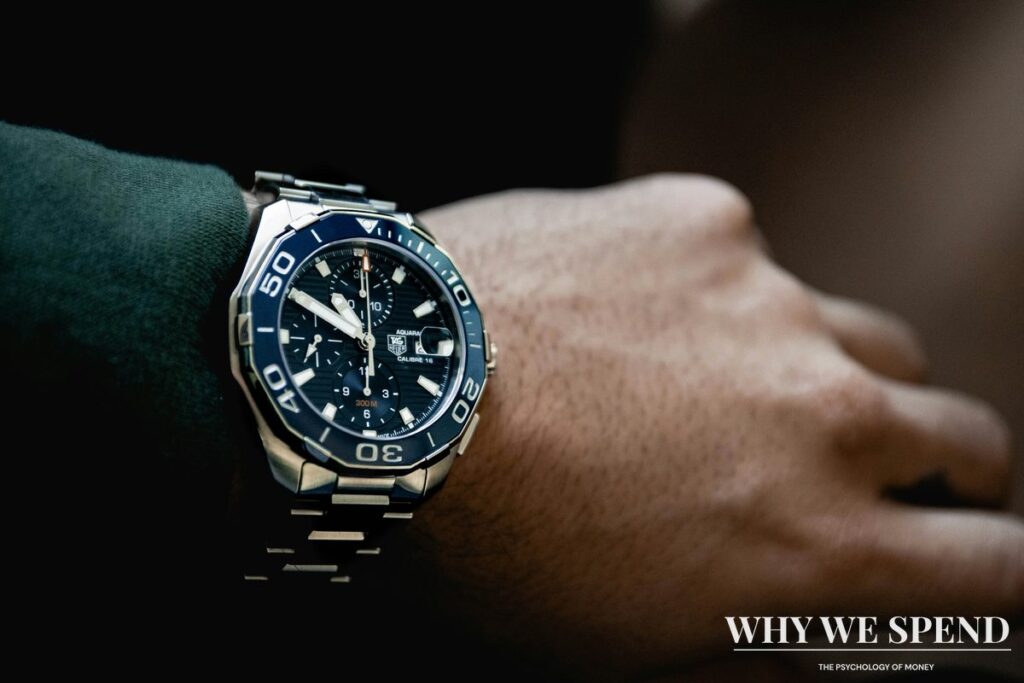
A 32-year-old accountant from KL who purchased a luxury watch from a financially troubled brand during restructuring admitted: “My parents’ generation had property. Our generation has logos. When the logos disappear, what do we have to show we’ve made it?” This stark admission reveals the psychological architecture behind the spending behaviour.
The Investment Justification Loop
Shoppers defend luxury brand purchases during bankruptcy with investment language: “It’ll appreciate in value,” “Limited pieces become more valuable,” “It’s not spending, it’s asset accumulation.” This mental accounting allows buyers to reclassify impulsive, emotion-driven purchases as rational financial decisions.
The truth? Most luxury goods depreciate immediately after purchase. Resale value typically hovers at 30-50% of retail price, occasionally spiking for specific sought-after pieces. Yet the investment narrative persists because it provides cognitive comfort, transforming a discretionary purchase into a strategic move. The story we tell ourselves about our spending matters more than the actual financial mathematics.
Why Luxury Brand Bankruptcy Accelerates Rather Than Stops Spending
Traditional economic models predict declining sales for financially distressed companies. Luxury retail defies this logic because the psychology operates differently. These aren’t utility purchases; they’re identity purchases. And identity doesn’t follow supply-demand curves—it follows narrative arcs and social scripts.
When a luxury brand faces bankruptcy, three psychological accelerants ignite simultaneously. First, the aforementioned scarcity effect creates urgency. Second, the underdog narrative becomes appealing—”I supported them to the end” provides its own form of social capital. Third, the possibility of brand revival creates a speculation mentality, where shoppers envision themselves as prescient investors who bought low before the phoenix rose.
This explains why Singaporean and Malaysian shoppers often display more intense loyalty during brand troubles than stability. The drama becomes part of the purchase story, adding layers of meaning that transcend the physical product. A handbag purchased during ordinary circumstances can’t compete with one purchased during “the crisis year”—the latter comes with built-in conversation value.
The Education System Nobody Asked For: What This Behaviour Actually Teaches
The luxury brand bankruptcy spending surge functions as an accidental education programme in consumer psychology, revealing several critical lessons about modern financial behaviour and status anxiety in Asian urban centres.
Lesson One: Identify What You’re Actually Buying
Before any significant purchase, particularly prestigious brands, separate the functional value from the emotional value. A RM5,000 handbag provides the same functional utility as a RM200 one—carrying objects from place to place. The RM4,800 difference purchases something intangible: social signalling, self-esteem support, group membership credentials. Once identified honestly, consumers can ask whether that intangible value justifies the price delta.
Lesson Two: Recognise Manufactured Urgency
Scarcity feels urgent regardless of whether it’s genuine. Luxury brand bankruptcy creates real scarcity, but your personal urgency to purchase is manufactured by your brain’s evolutionary wiring. This wiring evolved for actual scarce resources—food, shelter, mates—not Italian leather goods. When urgency strikes, pause and ask: “If this brand disappeared tomorrow, would my life materially change?” The answer is almost always no.
Lesson Three: Calculate Actual Asset Value
If investment justification drives a luxury purchase, apply actual investment standards. Check recent resale prices for similar items. Calculate depreciation rates. Factor in storage, insurance, and opportunity cost. When a RM8,000 watch resells for RM3,000 three years later, that’s a 62.5% loss—far worse than most investment losses people would tolerate. If it fails investment mathematics, stop calling it an investment.
Lesson Four: Build Status Systems You Control
Tying self-worth to external luxury brands creates fragility. These companies face market forces beyond anyone’s control—economic downturns, management failures, trend shifts. Building identity around corporations that might not exist in a decade means building on sand. Skills, relationships, experiences, and knowledge create portable status that survives any brand bankruptcy.
The Real Product on Sale
Luxury brand bankruptcy shopping reveals that prestigious retailers sell primarily one product: relief from status anxiety. The physical handbag, watch, or shoes are merely delivery mechanisms for that psychological relief. When the brand faces collapse, status anxiety intensifies—”Will I still belong? Will people still recognise my success?”—and shoppers purchase more relief to combat the increased anxiety.
This creates a self-reinforcing cycle that benefits neither the consumer nor, ultimately, the brand. Singaporeans and Malaysians, raised in highly competitive educational and professional environments, are particularly vulnerable to status-based consumption. The pressure to display visible markers of achievement runs deep, making luxury brand purchases feel less like choices and more like requirements for social survival.
Understanding this mechanism doesn’t necessarily stop the behaviour—awareness alone rarely changes deeply ingrained patterns. But it opens the possibility of conscious choice rather than automatic response. The next time a luxury brand faces financial troubles and queues form outside boutiques, observers can recognise the performance for what it is: a collective ritual where participants purchase temporary relief from the gnawing anxiety that maybe, just maybe, they haven’t made it after all. And that awareness, at minimum, lets consumers decide whether the relief is worth the price being charged.