

The last physical copy panic buy is a spending phenomenon where consumers rush to purchase physical versions of products—books, games, albums, films—the moment a digital-only transition is announced, despite having fully embraced digital consumption for years. This behaviour strikes particularly hard in Singapore and Malaysia, where collectors and pragmatists alike suddenly find themselves queuing at Popular bookstores or rushing to video game shops, spending significantly more than the digital alternative would cost.
Understanding this spending trigger matters because it reveals how perceived scarcity manipulates purchasing decisions, often leading to hundreds or thousands of ringgit or dollars spent on items that ultimately collect dust. The psychology behind this panic buying exposes deeper truths about ownership anxiety, loss aversion, and the gap between rational intentions and emotional spending.
The Scarcity Switch: When Digital-Only Announcements Trigger Spending

When PlayStation announced certain games would no longer receive physical releases, or when major publishers declared books would be digital-first, something shifted in consumer behaviour. Suddenly, Singaporeans who had not touched a physical game disc in months were pre-ordering limited editions. Malaysians who exclusively read on Kindle were buying hardcover versions “just in case.”
This reaction stems from manufactured scarcity. The human brain treats “last chance” scenarios as emergencies requiring immediate action. The announcement that something will no longer be available in physical form activates the same neural pathways as actual shortage—even when the digital version remains perfectly accessible and functional. The spending increase can be substantial: limited physical editions often cost 50-100% more than digital counterparts, yet sales spike precisely when digital-only transitions are announced.
In Singapore’s Kinokuniya or Malaysia’s MPH bookstores, staff report surges in physical book purchases whenever popular authors announce future digital-only releases. Consumers who had been perfectly content with e-readers suddenly become concerned about “owning” the physical object, despite overwhelming evidence they will read it digitally anyway.
Ownership Theatre: Why Last Physical Copy Panic Buy Feels Different
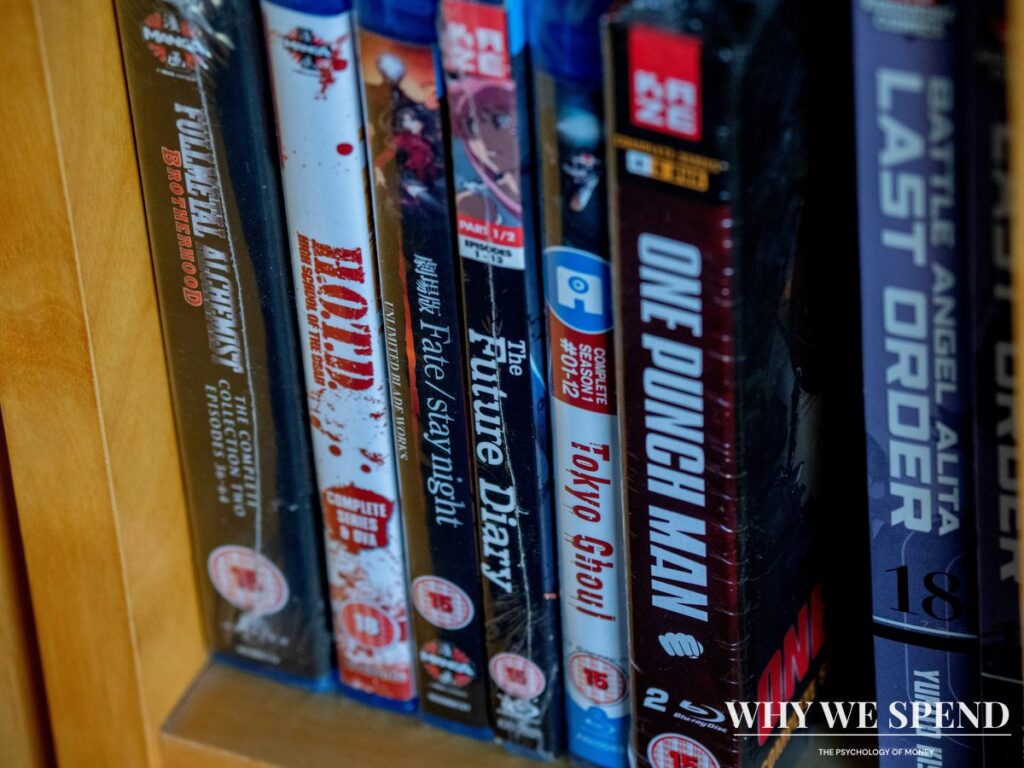
The last physical copy panic buy behaviour reveals a fundamental tension between perceived ownership and actual use. Digital products offer convenience, portability, and often lower prices. Yet the moment physical versions become scarce, consumers assign disproportionate value to tangible ownership.
This phenomenon particularly affects the “kiasu” mindset common in Singaporean and Malaysian culture—the fear of missing out or losing an advantage. The thought of not having the physical version when it becomes unavailable triggers deeper anxiety than rational assessment would justify. A RM250 collector’s edition game sits shrink-wrapped on the shelf whilst the same person plays the RM150 digital version.
The Shelf Appeal Illusion
Physical media on shelves creates what psychologists call “ownership display”—visible proof of taste, investment, and identity. When someone announces their home library or game collection, they are displaying cultural capital. The last physical copy panic buy exploits this by threatening to remove the option for display forever.
Many Singaporeans and Malaysians maintain extensive physical collections despite consuming everything digitally. The books remain unread on shelves, the vinyl records unplayed beside streaming speakers, the game cases unopened next to the digital downloads actually being used. The spending happens not for utility but for the psychological comfort of preserved optionality.
Loss Aversion Meets FOMO: The Last Physical Copy Spending Spike
Behavioural economics explains why the last physical copy panic buy triggers disproportionate spending through loss aversion—the principle that humans feel losses roughly twice as intensely as equivalent gains. When physical versions disappear, the brain registers this as a loss of choice, even when the functional alternative remains available.
Combined with FOMO, this creates a spending perfect storm. Malaysians might spend RM800 on a limited physical box set of a series they have already watched on Netflix, solely because “after this, it will only be streaming.” Singaporeans drop S$200 on vinyl pressings of albums permanently available on Spotify, driven by announcements of “final physical run.”
The spending increase becomes irrational when examined objectively. Digital versions offer superior convenience, require no physical storage space (crucial in Singapore’s limited housing), cannot be damaged or lost, and cost significantly less. Yet announcement of physical scarcity reliably triggers premium spending.
The Collector’s Trap: When Hoarding Replaces Using
The last physical copy panic buy often transforms casual consumers into accidental hoarders. What begins as “securing one copy” escalates into systematic purchasing of every announced “final physical release.” The spending compounds as publishers, recognising this behaviour, increasingly announce limited physical runs as marketing strategies rather than genuine necessity.
In Malaysia and Singapore, limited space makes this particularly problematic. An HDB flat or Malaysian apartment accumulates boxes of sealed physical media whilst the resident exclusively consumes digital versions. The financial impact extends beyond initial purchase—storage solutions, preservation materials, and opportunity cost of space all represent ongoing spending triggered by that initial panic buy.
When Publishers Exploit the Panic
Publishers and manufacturers have identified last physical copy panic buy behaviour as a revenue opportunity. “Limited physical edition,” “final print run,” and “collector’s edition” announcements often precede planned digital-only transitions, maximising spending from consumers afraid of missing out. The markup on these items can reach 200-300% above standard pricing, yet they sell out rapidly.
This creates a self-reinforcing cycle where announced scarcity triggers panic buying, which validates continued production of expensive limited editions, which further trains consumers to panic buy whenever scarcity is announced.
Lessons: Managing Last Physical Copy Panic Buy Impulses

Understanding the psychology behind this spending pattern enables better financial decisions without sacrificing genuine collecting interests.
The 30-Day Digital Test
Before purchasing a “last physical copy,” commit to using the digital version exclusively for 30 days. If the physical absence creates genuine inconvenience or dissatisfaction, the purchase may be justified. If the digital version serves perfectly well, the panic buy impulse can be recognised as emotional rather than practical.
Calculate True Cost Per Use
Divide the physical premium (the extra cost above digital) by realistic usage frequency. A RM300 physical game that will be played digitally anyway has an infinite cost per use for the physical version. This calculation often reveals the spending as purely psychological.
Define Collecting Boundaries
Intentional collecting differs from panic buying. Establish clear criteria: collect specific authors, particular game series, or defined genres rather than panic-buying everything announced as “last physical.” This transforms reactive spending into purposeful curation.
Recognise Artificial Scarcity
“Limited edition” and “final run” announcements are marketing tactics. Genuine scarcity is rare in modern manufacturing. If publishers see demand, physical versions return. The “last chance” is often manufactured pressure designed to trigger exactly this spending behaviour.
Embrace Digital Ownership Reality
Digital purchases represent actual ownership under current consumer laws in Singapore and Malaysia. The psychological discomfort with digital ownership reflects conditioning, not functional limitation. Recognising this helps reduce the anxiety driving physical panic purchases.
Breaking the Cycle
The last physical copy panic buy reveals how powerfully loss aversion and manufactured scarcity influence spending behaviour. For Singaporeans and Malaysians navigating limited space and careful budgets, recognising this psychological trigger provides protection against manipulated purchasing decisions. The physical object gathering dust whilst its digital counterpart sees daily use represents not just wasted money, but the power of emotional spending over rational choice. By understanding these triggers, consumers can distinguish between genuine collecting that brings value and panic buying that brings only temporary relief from manufactured anxiety.