
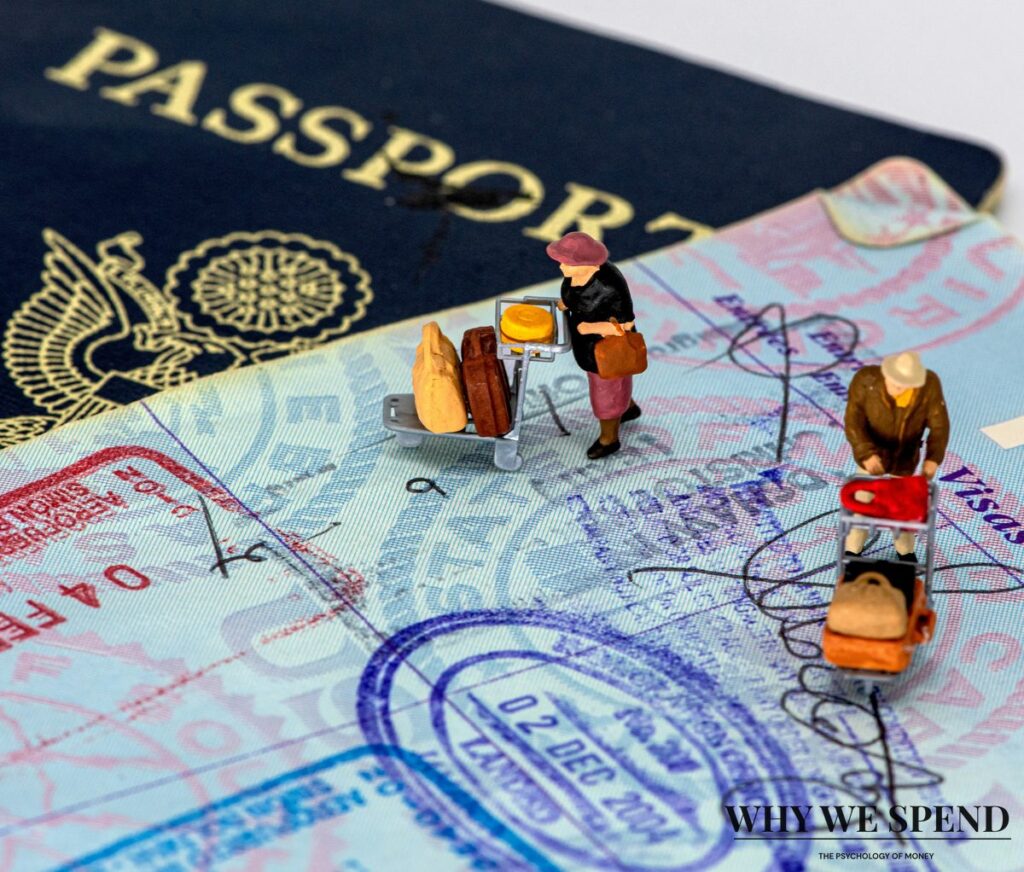
Spending on backup plans you’ll never use often stems from a deep-seated fear that today’s stability could vanish tomorrow. When someone watches news reports about deportations, job losses, or sudden policy changes affecting foreign workers, the impulse to create safety nets becomes overwhelming. The result? Thousands of ringgit or dollars poured into emergency passports kept current “just in case”, rental deposits on flats in home countries that remain empty, or multiple insurance policies covering the same risks. This behaviour reveals how witnessing other people’s vulnerability transforms abstract anxiety into concrete—and expensive—hedging strategies.
For Singaporeans and Malaysians working across borders, or even locals who’ve watched friends lose employment passes overnight, this fear hits differently. The psychological weight of knowing that one’s right to stay, work, or build a life somewhere can be revoked creates a particular kind of spending pattern: defensive financial decisions that prioritise the illusion of control over actual security.
The Psychology Behind Defensive Spending on Backup Plans

When people witness others experiencing sudden displacement or loss of status, their brains don’t process this as someone else’s problem. Instead, the amygdala—the brain’s threat-detection centre—treats it as a preview of potential personal disaster. This triggers what psychologists call “vicarious trauma” or “empathic distress”, where observing another person’s suffering creates genuine stress responses in the observer.
This manifests financially in predictable ways. A Malaysian professional working in Singapore might maintain an active tenancy agreement in Kuala Lumpur despite never visiting, spending RM1,800 monthly on a “home base” they’ll realistically never need. A Singaporean married to a foreigner might pay for multiple citizenship consultation services simultaneously, hedging bets across different countries. The common thread? These aren’t rational risk assessments—they’re emotional insurance policies.
The spending serves a psychological function beyond the stated purpose. Each payment creates a momentary sense of agency, a feeling that something is being done to prevent catastrophe. It’s the same mechanism that drives people to buy travel insurance worth more than their actual trip, or to maintain gym memberships at multiple locations “in case” one closes.
Why Watching Others Suffer Triggers Our Wallets
Social media amplifies this effect tremendously. When someone’s LinkedIn post about losing their work visa goes viral, or when neighbourhood chat groups share stories about families forced to leave suddenly, these narratives become psychologically “available”. Behavioural economists call this the “availability heuristic”—recent, vivid examples of bad things happening make us overestimate the probability they’ll happen to us.
For many Singaporeans and Malaysians, the context matters. Growing up in relatively stable countries whilst being acutely aware of regional disparities creates a specific mindset: grateful for current circumstances, but convinced they’re conditional. This breeds a particular vulnerability to defensive spending patterns
The Real Cost of Spending on Backup Plans

The financial impact extends beyond obvious monthly payments. Consider someone maintaining three different potential “escape routes”: an updated second passport (renewal costs every five years), a maintained residence in another country (rental or maintenance fees), and sufficient liquid savings to relocate within 30 days (opportunity cost of not investing that money).
A conservative estimate for a single professional might look like this: S$500 yearly for passport renewals and documentation, S$1,200 monthly for maintaining an unused residence, and S$20,000 sitting in a low-interest savings account “just for emergencies”. Over five years, that’s S$97,500 directed toward scenarios with extremely low probability of occurring.
The psychological cost runs deeper. Each backup plan reinforces the underlying anxiety. Rather than creating genuine security, these expenditures create a feedback loop: spending money on catastrophic scenarios makes those scenarios feel more real and imminent, which justifies more spending. It’s the financial equivalent of checking door locks repeatedly—the behaviour meant to reduce anxiety actually perpetuates it.
The Illusion of Control Through Spending
What makes spending on backup plans you’ll never use particularly insidious is how rational it feels in the moment. Unlike impulse purchases that trigger buyer’s remorse, defensive spending carries moral weight. It feels responsible, prudent, mature. Who could criticise someone for “being prepared”?
But preparation and anxiety-driven hedging aren’t the same thing. Genuine preparation involves assessing realistic risks and responding proportionally. Anxiety-driven spending involves worst-case scenario thinking that treats low-probability events as inevitable, then throwing money at every possible contingency.
When Backup Plans Become Avoidance
There’s a more uncomfortable truth beneath this spending pattern: sometimes these backup plans function as permission structures for not fully committing to present circumstances. If someone maintains a flat in their hometown whilst working abroad, part of their psyche remains uncommitted to their current location. The money spent isn’t just about fear—it’s about keeping one foot out the door.
This shows up in career decisions too. Professionals who maintain multiple backup plans often hesitate to make bold moves in their current location—negotiating aggressively for raises, switching to more challenging roles, or investing in property. After all, if they’re planning for sudden departure, why deepen roots?
The irony is that this defensive posture can become self-fulfilling. By treating current stability as temporary, people make choices that prevent them from building the very stability they’re seeking. The money spent on backup plans could have funded skill development, relationship building, or investments that actually strengthen their position.
What Actually Creates Security

Research on resilience consistently shows that what protects people during genuine crises isn’t elaborate contingency plans—it’s adaptability, social networks, and transferable skills. Someone with strong professional relationships, diverse capabilities, and a track record of solving problems will fare better in unexpected circumstances than someone with twelve different insurance policies but shallow roots.
This doesn’t mean abandoning all backup plans. The question is proportion and purpose. An emergency fund covering three to six months of expenses? That’s evidence-based financial planning. Maintaining citizenship documents in good order? Sensible. But paying thousands monthly to maintain empty residences in multiple countries whilst sacrificing current quality of life? That’s anxiety management masquerading as prudence.
Lessons: How to Stop Spending on Backup Plans You’ll Never Use
First, distinguish between reasonable preparation and anxiety spending. Write down each backup plan and its associated cost. Then honestly assess: what specific, realistic scenario does this address? What’s the actual probability? Am I responding to evidence or to fear?
Second, calculate the opportunity cost. That money spent on maintaining an unused flat could fund professional development, build an actual emergency fund, or strengthen current circumstances. Run the numbers over five years. Is the security being purchased worth what’s being sacrificed?
Third, address the underlying fear directly rather than financially. If watching deportation news triggers spending, that’s a signal to process the fear itself—through therapy, community support, or realistic risk assessment—rather than attempting to purchase peace of mind.
Fourth, redirect defensive spending toward building genuine security. Instead of paying for multiple “just in case” residences, invest in skills that travel. Instead of maintaining costly backup plans, build professional networks that provide real support during transitions.
Finally, recognise that perfect security doesn’t exist and cannot be purchased. The goal isn’t eliminating all risk—it’s building genuine resilience whilst living fully in the present, not perpetually hedging against hypothetical futures.
Moving Forward Without the Safety Blanket
Letting go of excessive backup plans feels terrifying precisely because they’ve been serving an emotional function. The spending has created an illusion of control in an uncertain world. But that illusion comes at enormous cost—not just financial, but in terms of presence, commitment, and the ability to build something meaningful where one actually is.
The alternative isn’t recklessness. It’s channelling that same financial energy toward things that create actual security: emergency funds, skill development, meaningful relationships, and the confidence that comes from having navigated challenges successfully before. When people stop spending on backup plans they’ll never use and start investing in becoming the kind of person who can adapt to whatever comes, the anxiety often diminishes naturally. The security being sought wasn’t in the backup plan—it was in trusting one’s own capability all along.