
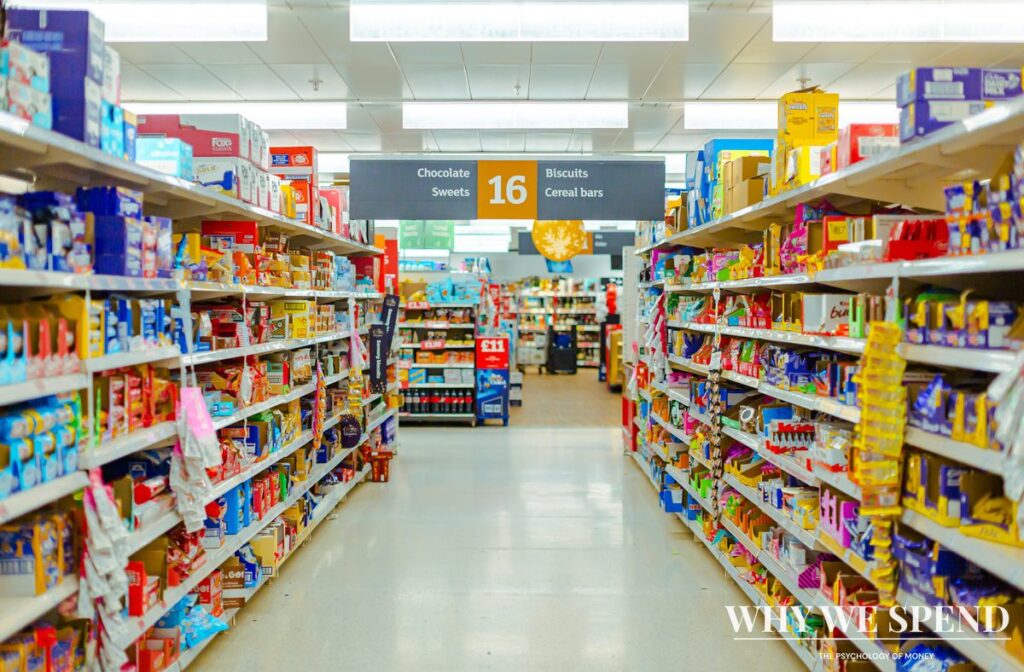
Hidden product variations that make you overspend are everywhere, from the batteries in the remote control to the size of the coffee tin on the shelf. Retailers and manufacturers have mastered the art of tweaking product specifications just enough that consumers pay more without realising they’re getting less—or buying more than they need. This spending trap costs Singaporean and Malaysian households hundreds, sometimes thousands, of ringgit or dollars annually, yet it remains one of the least discussed aspects of consumer psychology.
The battery example reveals how this works. Walk into any electronics shop in Jurong or Mid Valley, and the AA batteries come in packs of 4, 8, 10, 12, 16, or 20. The per-unit price varies wildly, but few shoppers calculate it on the spot. Even fewer notice that different brands offer different pack sizes at similar price points, making direct comparison nearly impossible. This deliberate complexity isn’t accidental—it’s designed to nudge consumers towards higher spending without triggering the mental alarm that signals “this is expensive.”
The Psychology Behind Hidden Product Variations

Humans are terrible at mental arithmetic when stressed or rushed. Research in behavioural economics shows that when faced with multiple variables—brand, price, quantity, quality—the brain takes shortcuts. Instead of calculating the true cost per unit, shoppers often default to the “middle option” or whatever feels like reasonable value. Retailers exploit this cognitive limitation by presenting products in ways that obscure true comparison.
In Singapore’s NTUC FairPrice or Malaysia’s Lotus, rice comes in 5kg, 10kg, 15kg, and 20kg bags—but also 2.5kg, 3kg, and 18kg. Cooking oil appears in 1 litre, 2 litres, 3 litres, and 5 litres bottles, but some brands offer 1.8 litres or 4.5 litres. This variation overload creates what psychologists call “decision fatigue.” The more options presented, the less mental energy remains for calculating actual value, making shoppers more likely to grab what seems reasonable and move on.
The Anchoring Effect in Pack Sizing
When a 500ml bottle of shampoo sits next to a 750ml bottle that costs only 30% more, the larger size appears to be fantastic value—an obvious choice for the savvy shopper. What goes unnoticed is that both are overpriced compared to bulk options available online or at warehouse clubs. The smaller bottle serves as an anchor, making the larger one seem like a bargain even when neither represents true value. This is how hidden product variations that make you overspend operate most effectively: by controlling the frame of reference.
How Manufacturers Profit From Variation Confusion
Product variation isn’t just about offering choice—it’s a profit strategy. By introducing multiple sizes, specifications, and variants, companies achieve several financial goals simultaneously. First, they segment the market, extracting maximum payment from different customer groups. Second, they make price comparisons difficult, reducing the likelihood that shoppers will switch to cheaper alternatives. Third, they create an illusion of choice that satisfies the psychological need for autonomy whilst actually limiting meaningful comparison.
Coffee brands in Malaysia demonstrate this brilliantly. One manufacturer might sell 100g, 200g, 400g, and 500g tins. Another offers 180g, 360g, and 450g. A third provides 175g, 250g, and 500g. Unless a shopper carries a calculator—or uses a smartphone, which many don’t bother with for small purchases—determining which brand and size combination offers the best value becomes nearly impossible. The slight differences in quantities aren’t random; they’re strategically chosen to prevent easy comparison.
The Shrinkflation Factor
Hidden product variations also enable shrinkflation—reducing product size whilst maintaining price. When a chocolate bar shrinks from 50g to 45g but stays at RM5, consumers rarely notice because the price remained familiar. The variation in sizes across different products and time periods creates a moving target that’s difficult to track. What was once 200g becomes 180g, then 175g, then 160g over several years. Each change is small enough to escape conscious detection, yet cumulatively significant.
Real-World Examples That Hit Close to Home
Singaporeans buying laundry detergent face choices between 2kg, 2.3kg, 2.4kg, 2.5kg, 3kg, 3.2kg, and 4kg boxes across different brands. Malaysian shoppers encounter milk powder in 350g, 400g, 450g, 600g, 850g, 900g, 1.2kg, and 1.8kg tins. Tissue paper comes in packs of 3, 6, 10, 12, 16, 20, 24, and 30, with each sheet size, ply count, and sheet-per-roll count varying by brand.
Mobile phone data plans show the same pattern: 5GB, 8GB, 10GB, 12GB, 15GB, 20GB, 30GB, 50GB, and 100GB options, with prices that don’t scale proportionally. A 20GB plan might cost $35 whilst a 30GB plan costs $40—seemingly better value. Yet a careful analysis might reveal that most users consume only 12GB monthly, meaning both plans represent overspending compared to a hypothetical 12GB plan priced at $25 that isn’t offered.
Hidden Product Variations in Services and Subscriptions
This phenomenon extends beyond physical products. Gym memberships come with bewildering variations: monthly, quarterly, annual, off-peak, peak, platinum, gold, silver, with personal training, without personal training, frozen memberships, guest passes included or excluded. Each variation makes comparing total cost and actual value extraordinarily difficult
Streaming services layer on similar complexity: basic plans, standard plans, premium plans, mobile-only plans, plans with ads, plans without ads, number of concurrent streams, video quality tiers. The variations serve partly to match different user needs but also to obscure whether upgrading truly offers proportional value. Many subscribers pay for premium features they rarely use because the pricing structure made the upgrade seem like a bargain.
Telco Plans and the Variation Maze
Singaporean and Malaysian telecommunications companies have perfected variation-based pricing. A single provider might offer 30 different combinations of data, talk time, SMS, international calling, roaming, and contract length. Comparing providers becomes nearly impossible when each structures their variations differently. This complexity isn’t a bug—it’s a feature that reduces price sensitivity and increases average revenue per user.
Lessons: How to Avoid Overspending on Hidden Variations
Calculate Cost Per Standard Unit
Always calculate price per standard unit—per 100g, per litre, per gigabyte—before making a purchase decision. Many Singaporean supermarkets now display unit pricing on shelf labels, but not all do, and the practice is less common in Malaysia. Using a smartphone calculator takes 15 seconds and can save 20-30% on regular purchases. Over a year, this habit saves substantial amounts.
Question Manufactured Urgency Around Size
When a “bonus size” or “special pack” appears, ask whether the variation represents genuine value or manufactured savings. If the regular 200g size costs $5 and the 250g “value pack” costs $6, the per-gram price is actually identical. The larger size only saves money if it would have been purchased eventually at a higher unit price point, not simply because it contains more.
Track What Actually Gets Used
Many households overspend on larger sizes that expire or go unused. The 5kg rice bag that seemed like better value isn’t actually economical if half goes stale. The family-size laundry detergent doesn’t save money if its size makes it cumbersome and leads to over-pouring per load. Track actual consumption over several months before committing to bulk or variation-based purchases.
Set Standard Baselines for Regular Purchases
For items purchased regularly—rice, cooking oil, toilet paper, mobile data—establish a personal baseline price per standard unit. Refuse to pay more than this baseline regardless of packaging variations. This mental anchor prevents variation confusion from driving overspending. If the baseline for rice is $1.50 per kilogram, any purchase above this threshold requires strong justification.
Recognise When Choice Is Actually Confusion
Extensive product variations often signal an attempt to reduce price transparency rather than genuine customer service. When variations make comparison difficult, that difficulty is likely intentional. In these situations, choosing based on actual need rather than apparent value often results in lower total spending. The “worst value” option that perfectly matches requirements beats the “best value” option that includes unnecessary extras.
Hidden product variations that make you overspend represent one of retail’s most effective psychological tools. By introducing complexity that overwhelms the brain’s computational capacity, retailers and manufacturers nudge consumers towards higher spending without triggering resistance. Awareness of this tactic, combined with deliberate calculation and baseline-setting, empowers shoppers to make choices based on actual value rather than manufactured comparison.
For households spending $500-800 monthly on groceries and essentials, applying these principles consistently can reduce expenses by $50-100 monthly without sacrificing quality or satisfaction—simply by seeing through the variation smokescreen.