

Rewarding yourself before finishing a goal is one of the most common ways people sabotage their own progress whilst simultaneously draining their wallets. The moment a Singaporean associate gets promoted to senior associate, they’re browsing Carousell for a second-hand luxury watch. When a Malaysian student passes their first accounting exam in a series of four, they’re already at Pavilion buying new trainers. This peculiar spending behaviour—celebrating a milestone as though it were the finish line—has a name: premature reward spending. And it’s costing Southeast Asians thousands in unnecessary purchases whilst leaving goals half-completed.
The psychology behind this spending pattern reveals why so many of us struggle to maintain momentum after initial success, and why our bank accounts suffer in the process.
The Psychological Relief That Opens Wallets

When someone achieves their first significant breakthrough toward a larger goal, the brain experiences a powerful release of dopamine. This neurochemical reward system evolved to reinforce behaviours that helped our ancestors survive, but in modern consumer culture, it triggers spending instead.
Consider the Singaporean professional who lands their first client after months of freelancing. The relief is immense. The anxiety that plagued them for weeks evaporates. In that moment of euphoria, spending SGD $800 on a “celebratory” dinner or SGD $500 on new work clothes feels justified. After all, they’ve “made it”—except they haven’t. They’ve landed one client, not built a sustainable business.
This pattern repeats across countless scenarios: the first property viewing that goes well (cue: shopping for furniture), the first stone lost in a weight-loss journey (cue: new wardrobe splurge), or the initial job interview callback (cue: victory trip booking).
Why the First Win Feels Like the Final Win
Behavioural economists have identified something called the “goal gradient effect”—people accelerate their efforts as they approach a goal. But there’s a lesser-known corollary: the “false summit effect.” When climbers see what appears to be the peak, their brains begin the celebration process, releasing endorphins and reducing the perception of remaining challenges.
The same happens with personal milestones. The first major hurdle cleared feels monumental because it represents the transition from “not started” to “in progress.” That psychological shift is dramatic, and our brains interpret it as more significant than it objectively is. The Singaporean kiasu mentality, ironically, can amplify this—having achieved something whilst peers haven’t creates such a strong validation hit that restraint goes out the window.
Rewarding Yourself Before Finishing: The Cultural Context
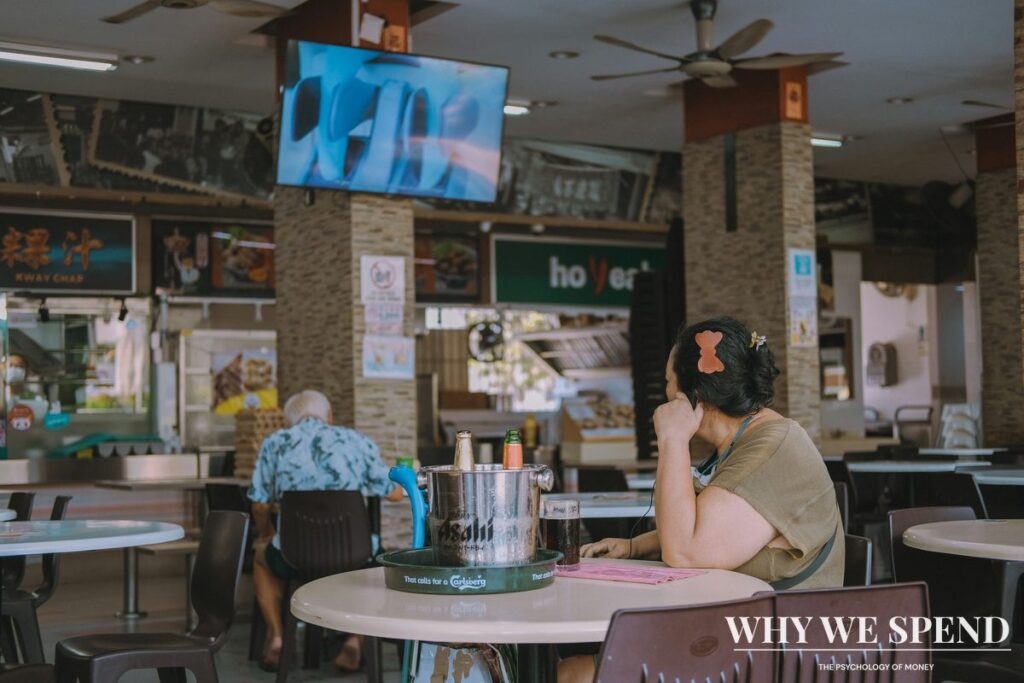
In Singapore and Malaysia, the concept of “treating yourself” has become deeply embedded in urban culture. Kopitiam conversations regularly feature phrases like “reward yourself lah” or “you deserve it what.” This social permission structure makes premature reward spending feel not just acceptable, but virtuous.
The mamak culture in Malaysia and kopitiam culture in Singapore traditionally offered low-cost reward mechanisms—a teh tarik session to celebrate small wins cost ringgit, not hundreds. But modern consumer culture has inflated what constitutes an appropriate reward. Social media amplifies this, with Instagram posts showcasing luxury “treat yourself” purchases that reset expectations for entire peer groups.
A Malaysian graduate who receives their degree classification (before convocation, before job hunting, before career launch) might feel compelled to buy a new phone because that’s what they see others doing. The reward has become decoupled from completion and instead attached to any forward progress.
The Comparison Trap Accelerates Spending
When Singaporeans and Malaysians see colleagues, friends, or influencers celebrating preliminary achievements with purchases, it creates a template. “Everyone who gets promoted seems to buy a new bag” becomes internalised as the proper sequence of events, rather than recognised as premature consumption.
This social scripting is particularly powerful in collectivist cultures where social harmony and “keeping up” carry significant weight. Refusing to celebrate visibly can feel like rejecting shared joy or appearing ungracious about one’s own success.
The Financial Cost of Premature Celebration
The direct costs are obvious—unnecessary purchases drain savings accounts. But the indirect costs are equally damaging. When someone rewards themselves prematurely, they often lose momentum toward the actual goal.
Research in motivation psychology shows that premature rewards can satisfy the psychological craving that was supposed to fuel continued effort. The Singaporean who buys expensive gym clothes after their first workout has already given themselves the identity marker of “someone who works out”—reducing the internal drive to actually continue exercising.
Financially, this creates a pattern of spending without corresponding achievement. Someone might spend RM2,000 celebrating getting 25% through a professional certification, then another RM2,000 at 50%, and so forth—accumulating RM8,000 in “reward” spending whilst never completing the qualification that would actually improve their earning power.
The Opportunity Cost Nobody Calculates
Every ringgit or dollar spent on premature rewards is a ringgit or dollar not available for the resources that might actually help complete the goal. The Malaysian entrepreneur who splashes RM3,000 on a weekend getaway after their first profitable month might have been better served investing that money in marketing for month two, when momentum matters most.
More insidiously, premature reward spending often requires the very resources that goals were meant to generate. People take on debt or deplete emergency funds to celebrate victories that haven’t yet produced sustainable returns.
Breaking the Premature Reward Spending Cycle

Understanding why this pattern occurs is the first step toward changing it. The brain’s need for rewards isn’t wrong—it’s simply being satisfied too early and too expensively.
Redesign the Reward Structure
The solution isn’t to eliminate rewards but to restructure them. Singaporeans and Malaysians can adopt a tiered reward system: small, low-cost celebrations for preliminary milestones, and significant rewards reserved for complete achievement.
Instead of SGD800 after the first client, perhaps SGD30 for a nice meal. The RM2,000 shopping trip gets postponed until five clients have been successfully delivered to and retained. The psychological acknowledgment happens, but the financial impact remains proportional to actual progress.
Create External Accountability
Announcing specific reward thresholds to trusted friends or family creates useful social pressure. “I’m going to book that Langkawi trip after I complete all four certification exams” sets a clear, socially-witnessed commitment that’s harder to violate than private intentions.
This works particularly well in Singaporean and Malaysian contexts where social relationships carry weight. The same peer influence that drives premature spending can be redirected toward supporting disciplined reward timing.
Separate Identity from Consumption
Much premature reward spending is actually identity spending—purchasing items that signal a new status the person hopes to embody. The promoted associate buys the watch to feel like someone at that level. The freelancer buys the co-working membership to feel legitimate.
Recognising this distinction helps. Identity can be claimed through behaviour rather than purchases. The freelancer becomes legitimate by delivering excellent work, not by surrounding themselves with the aesthetic trappings of success. The realisation that the purchase won’t actually create the identity—only completion of the goal will—can interrupt the spending impulse.
What You Can Learn About Premature Reward Psychology
The tendency toward premature reward spending reveals several useful principles about human spending behaviour:
Principle 1: Relief spending is real. The psychological release that comes with initial progress triggers spending urges that feel different from regular shopping desires. Recognising this distinct emotional state helps people pause before acting on it.
Principle 2: Social scripts override logic. When everyone else appears to celebrate early, it feels abnormal not to—even when logic suggests waiting. Consciously choosing different scripts (“I celebrate completion, not progress”) creates immunity to peer influence.
Principle 3: Small rewards sustain momentum better than large ones. Counter-intuitively, the RM50 treat after a preliminary win often sustains motivation better than the RM2,000 splurge, which can create the unconscious sense that the goal has already been achieved.
Principle 4: Delayed gratification compounds. Just as compound interest builds wealth, delayed rewards compound psychologically. The Singaporean who waits until completing their entire professional qualification before celebrating will experience a reward moment far more satisfying than four smaller premature celebrations, whilst retaining funds that could have been lost along the way.
Principle 5: Goals need fuel to reach completion. Money spent prematurely is money unavailable for the resources, time, or support that might be needed as goals get harder in later stages. Protecting resources until completion is strategic, not stingy.
The Path Forward
Rewarding yourself before finishing a goal will always be tempting because initial victories feel so significant. For Singaporeans and Malaysians navigating expensive urban environments with strong consumer cultures, the temptation is amplified by social visibility and cultural scripts around celebration.
But recognising the pattern is itself powerful. The next time that first client arrives, that first interview goes well, or that first exam gets passed, pause. Feel the relief. Acknowledge the progress. Then ask: “Is this the finish line, or just the first real step?” The answer will protect both the goal and the bank account, ensuring that when the real celebration comes, it’s fully earned and fully funded by the success it celebrates.
The best reward for a breakthrough that isn’t finished? The resources and momentum to actually finish it.