
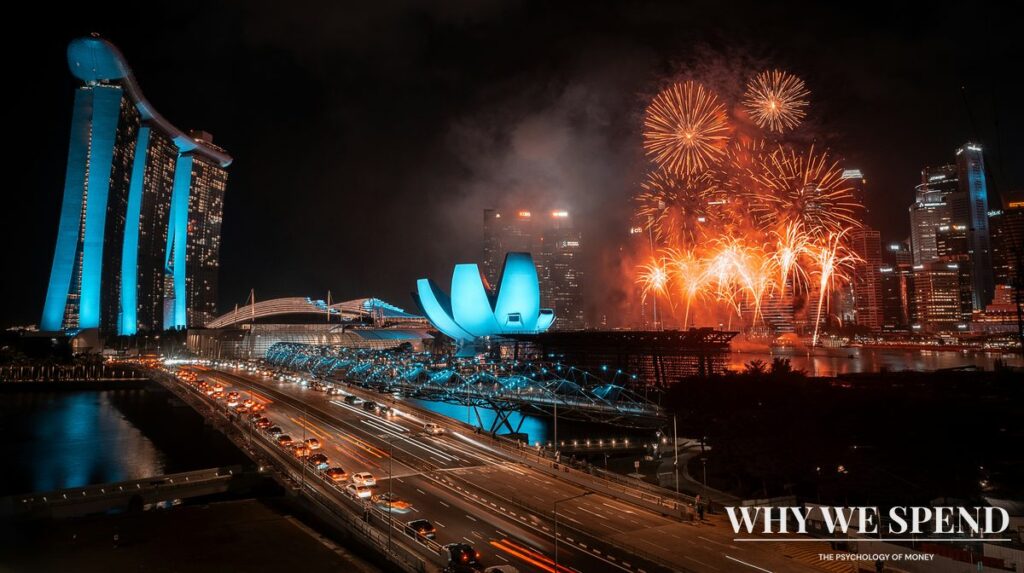
National milestones and financial anxiety are more connected than most people realise. When a country celebrates a major anniversary—Singapore’s National Day, Malaysia’s Merdeka, or any significant historical marker—something peculiar happens to personal spending patterns. People suddenly feel an urgent pressure to achieve their own financial milestones, leading to impulsive decisions and unnecessary purchases. This phenomenon, which psychologists call temporal landmarks, creates an artificial deadline in our minds that can wreak havoc on otherwise sensible money habits.
The effect intensifies around major celebrations. During SG50 in 2015, financial counsellors in Singapore reported a noticeable spike in clients making rushed property purchases and investment decisions. They felt that if the nation had achieved so much in 50 years, surely they should have accomplished more by now. This collective celebration of progress triggered deeply personal financial insecurity.
Why National Celebrations Trigger Personal Financial Panic

The psychology behind national milestones and financial anxiety stems from what researchers call social comparison theory. When the media highlights a nation’s achievements over decades, individuals instinctively measure their personal progress against this grand timeline. A 35-year-old watching Malaysia’s Independence Day parade might suddenly think: “The country has built highways, skyscrapers, and an entire economy in 68 years. What have I built in my 35?”
This comparison is fundamentally flawed, yet emotionally powerful. Nations and individuals operate on completely different scales, with different resources and objectives. But the human brain struggles with this distinction when emotions run high.
During these milestone years, advertising agencies capitalise on this vulnerability. Property developers in Kuala Lumpur and Singapore launch “Heritage Edition” condos or “Golden Jubilee” investment schemes, deliberately linking personal purchases to national pride. The message is clear: buying this flat isn’t just about shelter; it’s about participating in the nation’s success story.
The Kiasu Factor Amplifies the Pressure
For Singaporeans and Malaysians, the kiasu mentality—the fear of missing out or losing to others—compounds this effect. When national milestones arrive, social media fills with friends posting about their achievements: new homes, cars, business launches. Each post reinforces the feeling that everyone else is “keeping pace” with national progress whilst others are falling behind.
This creates a dangerous feedback loop. Seeing a secondary school classmate post photos of their new Condominium during SG60 preparations doesn’t just trigger envy; it creates a false temporal urgency. The thinking goes: “If I don’t buy property before this milestone year ends, I’ll have missed my chance to be part of this moment in history.”
The Spending Behaviours That Follow National Milestones

Research into consumer behaviour during national celebrations reveals several predictable patterns. Car sales in Malaysia typically surge during Merdeka month, with dealerships offering “patriotic packages” that appeal to both national pride and personal aspiration. Many buyers later admit they weren’t actually planning to purchase a vehicle but felt swept up in the momentous occasion.
Similarly, luxury goods retailers in Singapore report increased traffic during National Day periods. Consumers justify premium purchases as “rewarding themselves” for their contribution to national success, even when their personal finances don’t support such expenditures.
The phenomenon extends beyond physical goods. Financial advisors note that clients often make hasty decisions about insurance policies, investment products, or retirement planning during milestone years. The reasoning: “I’m already 40, and the country is 60. I need to catch up.” This artificial deadline pressure overrides careful financial planning.
The Post-Celebration Financial Hangover
Three to six months after major national celebrations, credit counselling services typically see increased cases. Many people who made emotionally-driven purchases during the milestone period face the practical consequences: maxed-out credit cards, unaffordable loan commitments, or depleted emergency funds.
One credit counsellor in Johor Bahru described a pattern where clients would say, “I don’t know what I was thinking. It just felt like the right time to finally buy that thing I’d been considering.” The national milestone had provided the emotional permission to override financial prudence.
How National Milestones and Financial Anxiety Affect Different Age Groups
The impact varies by generation. For those in their late 30s, milestone years often coincide with existing anxiety about achieving life goals before 40. A national 60th anniversary might trigger thoughts like: “In 20 years, I’ll be 55. Have I saved enough? Invested enough? Accomplished enough?”
Younger adults in their mid-20s face different pressures. They measure themselves against where their parents were at the same age during previous national milestones. “My father already owned a house when he was my age during Malaysia’s 25th anniversary. Why haven’t I bought property yet?” This comparison ignores dramatically different economic conditions across decades.
The “sandwich generation”—those supporting both children and ageing parents—feels particularly vulnerable. National celebrations highlighting progress and prosperity can feel like a cruel reminder of their stretched finances and delayed personal goals.
Breaking Free from Milestone-Induced Financial Pressure

Understanding national milestones and financial anxiety is the first step toward making better decisions. Several strategies can help resist the emotional pull of these temporal landmarks.
Recognise the Artificial Deadline
National anniversaries are arbitrary markers of time. Singapore didn’t fundamentally change between SG49 and SG50, just as Malaysia wasn’t different on 31 August compared to 30 August during a milestone year. These dates carry symbolic weight but create no actual financial deadline for personal goals.
Separate National Achievement from Personal Progress
Countries and individuals face completely different circumstances. A nation’s 65-year journey from independence to developed economy has no bearing on whether someone should buy a car this year or wait until next year when their savings position improves.
Question Marketing Messages
When advertisements link products to national pride or milestone moments, ask: “Would I want this purchase if it weren’t connected to this celebration?” Often, the answer reveals that the desire is manufactured rather than genuine.
Lessons: Building a Timeline That Actually Matters
The antidote to milestone-induced financial anxiety is creating a personal financial timeline based on individual circumstances rather than external events. Here are the core principles:
Principle 1: Personal milestones should be based on readiness, not arbitrary dates. Buy property when the deposit is saved, the income is stable, and the mortgage is affordable—not because it’s a national anniversary year.
Principle 2: Progress isn’t linear or comparable. Some years involve building emergency funds rather than making visible purchases. This matters more than keeping pace with perceived peer achievements during milestone years.
Principle 3: Emotional permission doesn’t require external validation. A significant purchase doesn’t need a national celebration to justify it. If the finances are sound, any year is the right year.
Principle 4: Resist the kiasu impulse during celebrations. Just because everyone seems to be buying, investing, or upgrading during a milestone period doesn’t mean it’s the right decision for every individual situation.
Principle 5: Create buffers during high-emotion periods. During national milestone years, implement a cooling-off period for major financial decisions. Wait 30 days after initially considering a purchase to see if the desire persists beyond the celebratory atmosphere.
The next time a national milestone approaches, remember that the country’s timeline and personal financial journeys operate independently. Singapore and Malaysia will continue progressing regardless of individual purchasing decisions. The real achievement isn’t matching personal milestones to national ones—it’s building financial security at a pace that genuinely works for each person’s unique circumstances. That kind of progress doesn’t need a commemorative edition to be meaningful.