
Overspending on children has become the silent budget killer for many families in Singapore and Malaysia. That RM800 petting zoo party package, the third enrichment class this term, the branded trainers they’ll outgrow in four months—these aren’t just expenses. They’re emotional decisions wrapped in parental guilt, social pressure, and the fear of falling behind in Asia’s competitive child-rearing landscape.
The spending pattern typically looks innocent enough. A weekend activity here, a educational toy there. But when the credit card statement arrives, many parents experience that sinking feeling: how did children’s expenses balloon to nearly half the monthly budget? The answer lies not in the individual purchases, but in the psychology driving each swipe of the card.
The Guilt Economy of Modern Parenting

Working parents in Singapore and Malaysia face a particular flavour of guilt. Long office hours, the daily commute, weekend work emails—all create a nagging feeling that time with children isn’t enough. Many parents try to compensate with money, turning purchases into proxy measurements of love and adequate parenting.
This guilt spending manifests in several ways. There’s the “yes” reflex at toy shops after a long work week. The expensive birthday party that’s really about proving to other parents (and oneself) that the family is doing fine. The endless stream of classes and activities designed to give children “every advantage,” even when the child shows no interest.
A Singaporean mother recently shared that she spent SGD $3,000 on her daughter’s fifth birthday party, complete with themed decorations, an entertainer, and party bags worth SGD $30 each. When asked why, her answer was telling: “I felt bad that I’d missed so many bedtimes that month.” The party wasn’t for her daughter—it was an expensive guilt offering to herself.
The “Kiasu” Spending Trap
The local kiasu mentality—the fear of losing out—adds another layer to overspending on children. When other kids attend three enrichment classes, parents feel their child needs four. When classmates holiday in Japan, there’s pressure to match or exceed it. This comparative spending has nothing to do with what children actually need or want.
Malaysian parents report spending RM500 to RM1,500 monthly on enrichment classes alone, often juggling schedules across ballet, coding, Mandarin, abacus, and swimming. Many admit their children show signs of burnout, yet stopping feels like admitting defeat in an unspoken competition.
Why Overspending on Children Feels Different
Parents justify children’s expenses differently from personal spending. A RM300 handbag feels frivolous, but RM300 on a “educational experience” feels virtuous. This mental accounting trick allows spending to spiral because it never registers as indulgence—it’s always framed as investment.
The problem intensifies in group settings. Playdates, school events, and family gatherings become stages where parenting gets judged through visible markers of spending. Children become unwitting billboards for their parents’ financial status and perceived adequacy as caregivers.
Research in consumer psychology shows that purchases made to alleviate guilt or anxiety provide only temporary emotional relief. The guilt returns, often stronger, creating a cycle: spend to feel better, feel guilty about spending, spend more to compensate for the guilt about spending. Meanwhile, credit card debt accumulates.
The Petting Zoo Reality Check
That viral petting zoo incident—where a family’s elaborate animal party package resulted in a terrifying rabies scare—serves as an apt metaphor. Parents often think catastrophic consequences happen to other families. Other people overspend and face financial ruin. Other people spoil their children. Other people can’t say no.
Until the receipt becomes impossible to ignore. Until the credit card reaches its limit. Until a child throws a tantrum because one weekend doesn’t include an expensive outing. These moments force confrontation with an uncomfortable truth: the spending wasn’t helping the children. It was helping parents avoid uncomfortable feelings about work-life balance, social standing, or their own childhood deprivations.
What Children Actually Remember
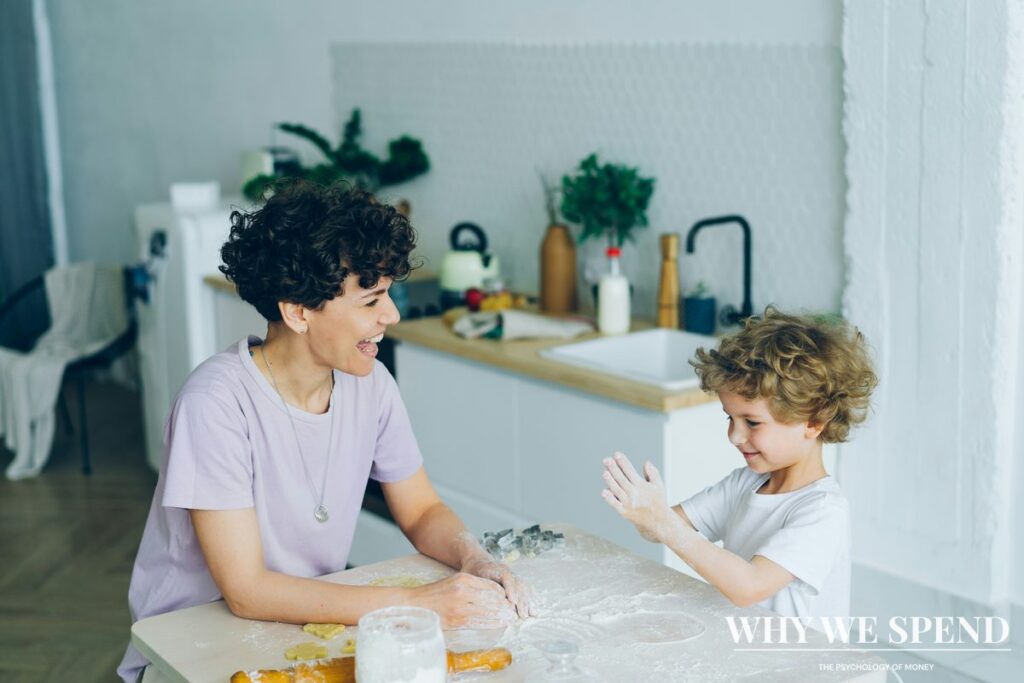
Here’s the uncomfortable reality: children rarely remember how much was spent. Developmental psychologists consistently find that children value presence over presents, time over things. A ten-year-old typically can’t recall whether their seventh birthday cost RM500 or RM5,000, but they remember if their parents were stressed or joyful.
Singaporean and Malaysian adults reflecting on childhood most often cite simple experiences: helping cook in the kitchen, weekend morning markets with a parent, inside jokes, regular family dinners. The expensive holiday to Disneyland gets remembered, but not more fondly than the weekend camping trip that cost a fraction of the price.
This doesn’t mean never spending on children’s activities or treats. It means questioning the emotional driver behind each purchase. Is this genuinely for the child’s benefit and aligned with family values? Or is it addressing the parent’s anxiety, guilt, or need for social validation?
Breaking the Overspending Cycle
Changing spending patterns around children requires addressing the underlying emotions first. No budgeting technique works if guilt and social pressure remain unexamined.
The Emotional Audit
Before any children’s purchase over a certain threshold (perhaps RM200 or SGD $100), parents can ask: “What feeling am I trying to fix with this purchase?” If the honest answer involves guilt, comparison, or proving something to others, that’s a red flag. Not necessarily a full stop, but a signal to pause and reconsider.
The Values Filter
Families benefit from explicitly discussing their values around money, childhood, and success. When spending decisions get filtered through agreed-upon values rather than emotional impulses, priorities become clearer. A family valuing creativity might spend on art supplies but skip branded clothing. A family valuing experiences might budget for travel but eliminate unnecessary toys.
The Quantity Versus Quality Shift
Research on happiness consistently shows that experiences provide more lasting satisfaction than material goods, and that quality matters more than quantity. One meaningful weekly ritual—Sunday breakfast together, Thursday evening board games—often provides more connection than expensive weekend outings every month.
For enrichment activities, the question shifts from “how many classes can we afford?” to “which single activity genuinely lights up our child?” One passion pursued with enthusiasm beats four activities attended with resentment.
Practical Boundaries That Actually Work
Theory means nothing without implementation. Families successfully managing overspending on children typically employ clear systems.
Many establish categorical budgets: RM X for activities, RM Y for toys, RM Z for special events. When that month’s toy budget is spent, it’s spent. This removes the emotional decision from each shopping trip. The answer becomes simple: “We’ve used this month’s toy money. Let’s add it to next month’s list.”
Others use the “one in, one out” rule for toys and clothes. Something new means something old gets donated. This teaches children about finite resources while preventing accumulation.
Birthday parties represent a common overspending trigger. Some families adopt firm rules: parties at home or at a specific venue with a fixed guest count. The rule removes the annual stress of trying to outdo the previous year or match other parents’ efforts.
Teaching Children About Money Through Spending Behaviour
Children learn about money primarily through observation, not lectures. Parents constantly spending “for their sake” inadvertently teach that love equals consumption, that happiness requires purchases, that self-worth gets measured in material goods.
Conversely, parents who occasionally say “that’s not in our budget this month” or “let’s wait and see if you still want it next week” teach patience, priority-setting, and that limits exist. These lessons prove far more valuable than any enrichment class.
The most financially capable adults often come from families that were neither wealthy nor poor, but that talked openly about money, made deliberate spending choices, and occasionally said no despite having the funds available. The skill of distinguishing between wants and needs, developed in childhood, serves people throughout their lives.
The Real Cost of Overspending
Beyond the obvious financial strain—debt, insufficient savings, delayed retirement planning—overspending on children carries hidden costs. Parental stress about money affects family dynamics. Children sense anxiety even when parents think they’re hiding it. The irony is sharp: spending meant to provide security and happiness often generates the opposite.
There’s also the opportunity cost. Money spent on unnecessary children’s items is money not available for genuine family needs or goals. That third enrichment class might mean less emergency fund cushioning. The elaborate party might delay addressing a needed home repair.
Perhaps most significantly, overspending now can affect children’s future. Parents who sacrifice their own retirement savings to fund children’s current lifestyle may inadvertently create a future burden, when those children need to support ageing parents financially.
Key Lessons on Overspending on Children
Breaking free from guilt-driven overspending requires both emotional awareness and practical systems. Here are the core principles to apply:
Identify the emotional trigger. Before major children’s purchases, honestly ask what feeling is driving the decision. Guilt, comparison, and inadequacy are red flags suggesting spending won’t solve the underlying issue.
Establish values-based spending rules. Create clear family values around money and childhood, then filter purchase decisions through these agreed principles rather than emotional impulses or social pressure.
Focus on quality over quantity. One meaningful activity or tradition typically provides more value than numerous expensive but scattered experiences. Children thrive on consistency and presence more than variety and expense.
Set categorical limits. Specific budgets for toys, activities, and events remove emotion from individual purchase decisions. When the monthly allocation is spent, the answer becomes simple and non-negotiable.
Model healthy money behaviour. Children learn about finances through observation. Parents who make deliberate spending choices, occasionally say no, and discuss trade-offs teach financial capability more effectively than any enrichment class.
Recognise the opportunity cost. Every ringgit or dollar spent on unnecessary children’s items is unavailable for genuine family needs, emergency funds, or long-term security. Today’s overspending can become tomorrow’s burden.
Remember what children actually value. Developmental research consistently shows children remember presence, not price tags. The expensive outing matters less than the undivided attention accompanying it.
Moving Forward Without the Guilt
Reducing overspending on children doesn’t mean becoming stingy or depriving them of joy. It means aligning spending with genuine values and needs rather than emotional triggers and social pressure. It means recognising that the best gift parents can give children isn’t more stuff—it’s financial stability, emotional presence, and the modelled behaviour of making deliberate choices.
The petting zoo receipt might have become a regret, but it also became a lesson. Sometimes the most expensive experiences teach the most valuable truths: that warnings do apply to all families, that unchecked spending catches up eventually, and that love doesn’t require a receipt at all.