
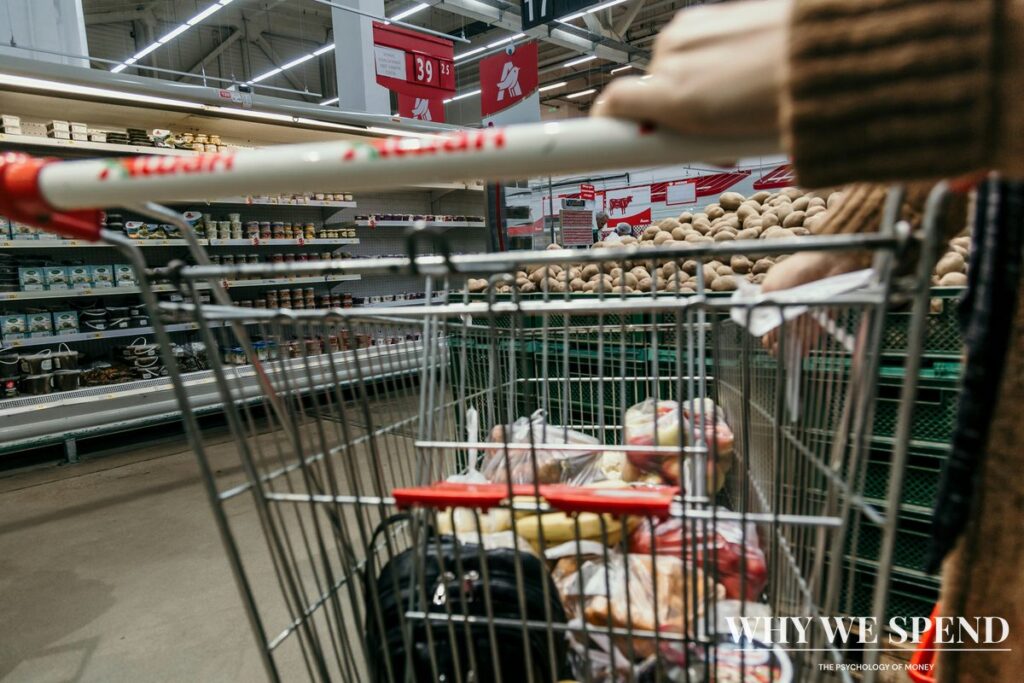
Panic buying before bad weather strikes is a universal spending pattern that defies logic. The moment weather alerts flash across phones in Singapore and Malaysia, supermarket trolleys overflow with instant noodles, bottled water, and torches—even though most people live in high-rise flats with reliable utilities and won’t be trapped for more than a few hours. This “storm warning” shopping behaviour reveals deep psychological triggers that cause perfectly rational people to spend hundreds of ringgit or dollars on items they’ll never use.
Understanding why panic buying before bad weather happens matters because it’s about more than just monsoon season. It’s about recognising the emotional patterns that make people overspend whenever they feel threatened, whether by weather, health scares, or economic news. These patterns cost money and create clutter, yet they repeat themselves with predictable regularity.
The Psychology Behind Panic Buying Before Bad Weather
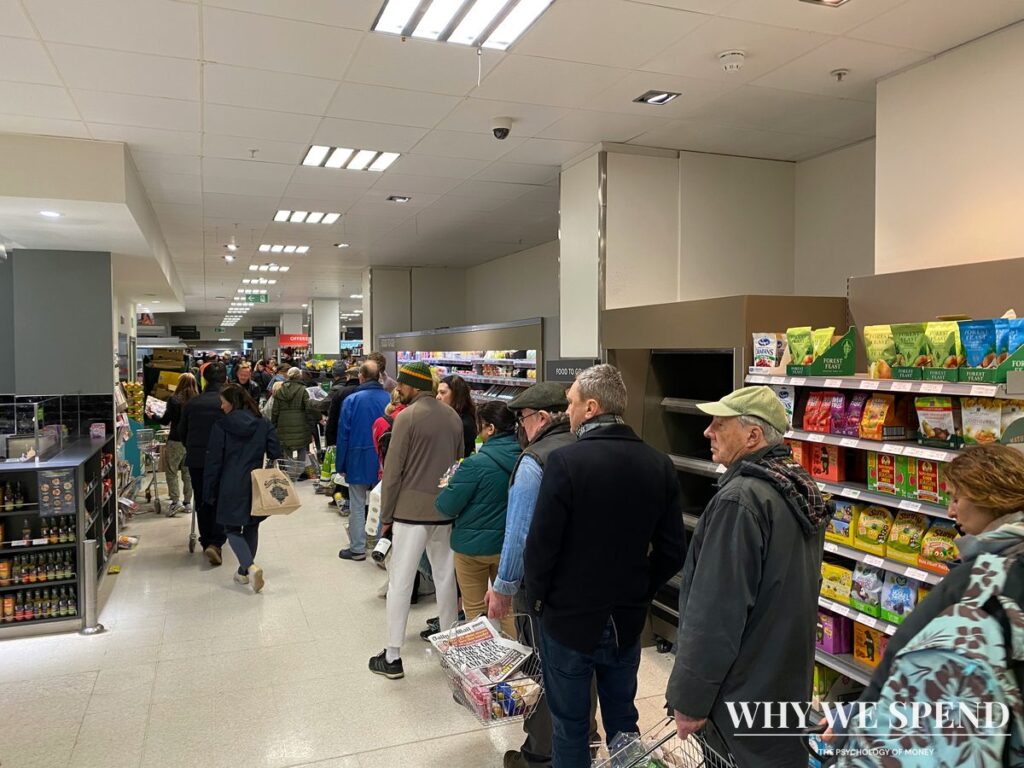
Weather-triggered shopping sprees stem from a primal survival instinct. When authorities issue storm warnings or flood alerts, the brain’s threat detection system activates. This ancient mechanism served humans well when natural disasters genuinely meant isolation and starvation. Today, when most Singaporeans and Malaysians live within walking distance of 24-hour convenience stores and rarely face true supply disruptions, the same instinct misfires spectacularly.
The phenomenon intensifies because of what behavioural economists call “loss aversion”—the psychological principle that people fear losses more intensely than they value equivalent gains. Missing out on essentials during a crisis feels catastrophic, even when rational assessment shows minimal risk. A Singaporean buying six loaves of bread before a thunderstorm warning isn’t really worried about bread availability; they’re trying to avoid the emotional pain of potentially needing bread and not having it.
The Social Proof Multiplier
Panic buying before bad weather accelerates through social proof. When someone sees their neighbour loading tinned food into the car, or when WhatsApp family groups start buzzing with messages about empty supermarket shelves, the urgency multiplies. Malaysians checking social media during monsoon season encounter photos of queues at Tesco or Giant, which triggers the fear of being left behind. This creates a self-fulfilling prophecy: people buy excessively because they believe others are buying excessively, which causes actual shortages that validate everyone’s panic.
The behaviour becomes especially pronounced in Singapore, where limited storage space makes bulk buying impractical. Despite this, many Singaporeans still rush to FairPrice during weather warnings, filling baskets with items that won’t fit in their HDB pantries. The temporary anxiety relief from purchasing outweighs the logical assessment of actual need or storage capacity.
What People Actually Buy (And Don’t Actually Need)
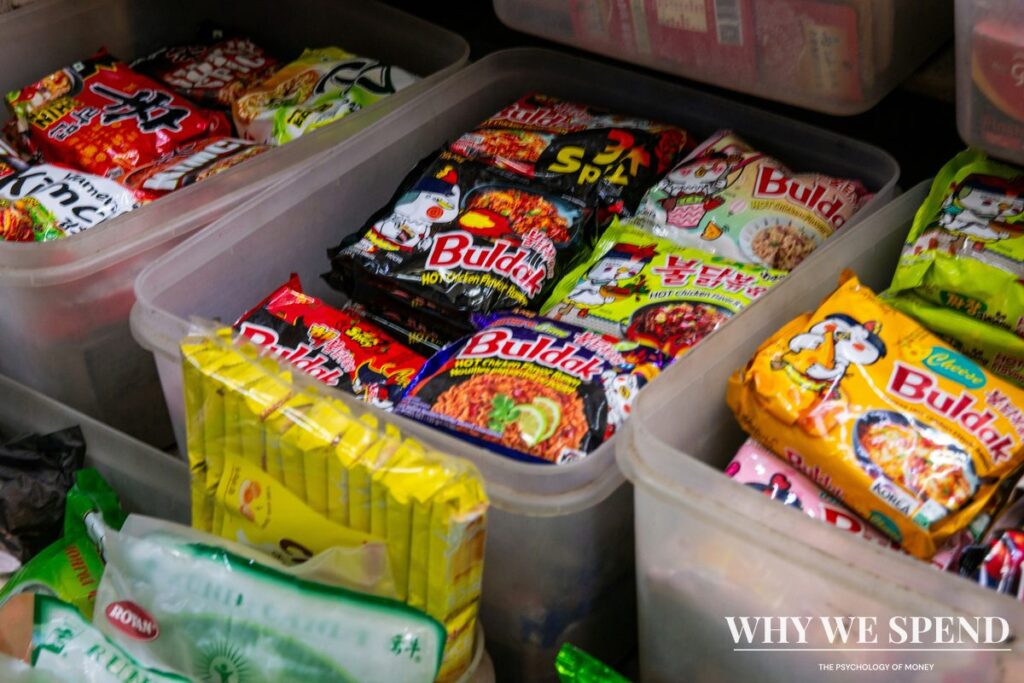
Analysis of panic buying before bad weather reveals consistent patterns across both countries. Instant noodles consistently top the list, despite most people having functioning stoves and rice cookers throughout typical weather events. Singaporeans clear out Cup Noodles; Malaysians stock up on Maggi Mee. Bottled water flies off shelves even though tap water rarely stops flowing during thunderstorms or heavy rain.
Torch batteries sell out despite most modern phones having torch functions and power banks being commonplace. Bread disappears from shelves despite having a short shelf life that makes it useless for genuine emergency preparation. One Malaysian supermarket manager shared that customers bought RM50,000 worth of bread in three hours before a storm warning, most of which would have gone mouldy within days.
The Forgotten Purchases
The aftermath of panic buying before bad weather tells the real story. Studies across Southeast Asia show that 40-60% of storm-related purchases remain unused. Those extra tins of sardines sit in cupboards for years. The “emergency” torch never leaves its packaging. Singaporean households surveyed six months after weather-related shopping sprees couldn’t recall purchasing one-third of the items found in their storm supplies.
This pattern represents pure waste—not just of money, but of mental energy and storage space. A typical panic shopping trip costs between RM200-500 or SGD80-200, depending on family size and anxiety levels. Multiply this across annual weather events, and many households spend over RM1,000 or SGD400 yearly on unused emergency supplies.
Why This Pattern Persists Despite Experience
People don’t learn from previous panic buying episodes because the emotional payoff happens immediately, whilst the lesson arrives weeks later. The relief someone feels after stocking up during a weather warning provides instant gratification. Their brain registers: “Threat detected, action taken, anxiety reduced.” This reward cycle strengthens the behaviour regardless of whether the threat materialised.
When the storm passes and life continues normally, there’s no negative consequence strong enough to override the positive feeling of “being prepared.” Finding unused supplies months later doesn’t create the same emotional impact as the initial anxiety relief. The Malaysian who spent RM300 on tinned food before monsoon season might feel mild annoyance at the cupboard clutter, but this weak emotion cannot compete with the powerful anxiety-relief memory.
The Availability Heuristic in Action
Panic buying before bad weather also persists because of dramatic news coverage. Media reports showing flooded streets, fallen trees, or crowded supermarkets create vivid mental images. These memorable scenes make disaster scenarios feel more likely than they actually are—a cognitive bias called the availability heuristic. A Singaporean who’s never personally experienced supply disruption still remembers news footage of panic buying during previous weather events, making the scenario feel imminent and personal.
The Financial Cost of Weather-Triggered Spending
Beyond the immediate purchase waste, panic buying before bad weather creates cascading financial effects. Unused tinned goods eventually expire and require replacement, doubling the cost. Storage solutions—additional cabinets or containers—add expense. Some people rent storage units partly to house accumulated emergency supplies, spending RM100-300 monthly to store items purchased during momentary panic.
The opportunity cost matters too. Money spent on redundant storm supplies could fund proper financial emergency buffers. A Malaysian spending RM1,000 annually on panic purchases could instead build a genuine emergency fund earning interest, providing real security against job loss or medical expenses—threats far more likely than being trapped without instant noodles.
Lessons: Breaking the Storm Warning Shopping Cycle
Understanding panic buying before bad weather creates opportunities to change the pattern. These practical principles help people respond to weather alerts without overspending:
Maintain a Baseline Emergency Kit
Keep a small, genuinely useful emergency supply year-round: torch with fresh batteries, basic first aid items, one week’s essential medications, and minimal non-perishable food actually consumed regularly. This removes the urgency from shopping during weather warnings. Singaporeans might store three days of supplies; Malaysians in flood-prone areas might keep one week’s worth. The key is “actually consumed regularly”—if the family doesn’t normally eat tinned sardines, they won’t want them during a crisis either.
Create a Weather Warning Protocol
Decide in advance what actions different alert levels warrant. A thunderstorm warning might mean charging devices and postponing errands—no shopping required. A red alert might justify checking existing supplies and purchasing one or two genuinely missing items. Writing this protocol down removes emotion from the decision-making process.
Implement the 24-Hour Rule
Unless authorities order immediate evacuation, wait 24 hours before panic buying. This pause allows the initial anxiety to subside and permits rational assessment of actual needs. Most weather events in Singapore and Malaysia provide ample warning time. This rule prevents impulsive spending whilst still allowing genuine preparation if truly needed.
Track Past Purchases
Photograph shopping receipts and storm supplies after weather events. Review these images before the next shopping trip to see what remained unused. This creates accountability and helps the brain connect cause (panic buying) with effect (waste). Malaysians who implemented this tracking reduced weather-related spending by 60-70% within one year.
Redirect the Preparation Urge
Channel the desire to “do something” toward free preparation activities: clearing drains around the property, moving potted plants indoors, backing up important digital files, or reviewing insurance coverage. These actions provide the same psychological relief as shopping without the financial cost.
A Different Kind of Preparedness
True preparedness isn’t about accumulating tins of food or bottled water. It’s about building resilient systems—financial buffers for genuine emergencies, strong community connections for mutual support, and emotional awareness to recognise when anxiety drives spending decisions. The next time weather alerts arrive and the urge to rush to the supermarket strikes, that impulse itself is valuable information. It reveals not what someone needs to buy, but what they fear losing. Addressing the underlying anxiety directly, rather than through purchases, creates both better emotional health and better financial outcomes.
Panic buying before bad weather will likely never disappear entirely—it’s too deeply rooted in human psychology. But understanding the pattern creates choice. Singaporeans and Malaysians who recognise their triggers can respond thoughtfully rather than reactively, keeping both their homes and their bank accounts free from unnecessary clutter.