
The wartime wallet reflex describes a curious psychological phenomenon where people adjust their spending habits and redefine financial safety in response to distant conflicts, even when their daily lives remain unchanged. When news of international tensions or warfare fills social media feeds, many Singaporeans and Malaysians find themselves suddenly questioning purchases they would have made without hesitation just weeks earlier. That holiday to Bali gets postponed. The car upgrade waits another year. Premium groceries at Cold Storage get swapped for budget options at Sheng Siong or Tesco.
This shift happens despite no immediate threat to personal safety, employment, or income. The conflict might be thousands of kilometres away, yet wallets snap shut as though preparing for an imminent siege. Understanding this reflex reveals much about how humans process risk, security, and money during uncertain times.
The Psychology Behind the Wartime Wallet Reflex
When distant conflicts dominate headlines, the human brain struggles to accurately calibrate actual risk versus perceived risk. Evolution wired people to respond to threats with immediate protective behaviours, but modern life presents a unique challenge: information about faraway dangers arrives in real-time, triggering ancient survival instincts without proportional actual danger.
For Singaporeans and Malaysians, this plays out in specific ways. Both nations have enjoyed decades of relative peace and stability, creating populations psychologically unaccustomed to direct conflict. When war breaks out elsewhere, the contrast feels particularly stark. The cognitive dissonance between scrolling through videos of bombed cities whilst sitting in an air-conditioned HDB flat or enjoying teh tarik at a mamak creates an unsettling juxtaposition.
The brain resolves this discomfort through control-seeking behaviours. Since one cannot control geopolitical events, attention shifts to what can be controlled: personal finances. Tightening the budget provides a tangible sense of preparation and agency, even when the logical connection between cutting back on weekend dim sum and distant warfare makes little practical sense.
The Role of Media Saturation
Social media amplifies the wartime wallet reflex exponentially. A person might check their phone dozens of times daily, each session delivering fresh updates about conflicts, economic implications, or expert predictions of doom. This constant exposure keeps threat perception elevated, making it nearly impossible for the nervous system to return to baseline.
The kiasu mentality common in Singapore particularly intensifies this effect. The fear of missing out extends to fear of being unprepared, creating a cycle where seeing others stock up on rice or discuss economic concerns triggers similar behaviours, regardless of actual necessity.
How the Wartime Wallet Reflex Manifests in Daily Spending
The wartime wallet reflex shows up in predictable patterns. Discretionary spending faces the sharpest cuts. Restaurant visits decrease. Fashion purchases get delayed. Entertainment subscriptions come under scrutiny. One might notice oneself mentally categorising every expense as either “essential” or “frivolous,” with the frivolous category expanding to include items previously considered normal.
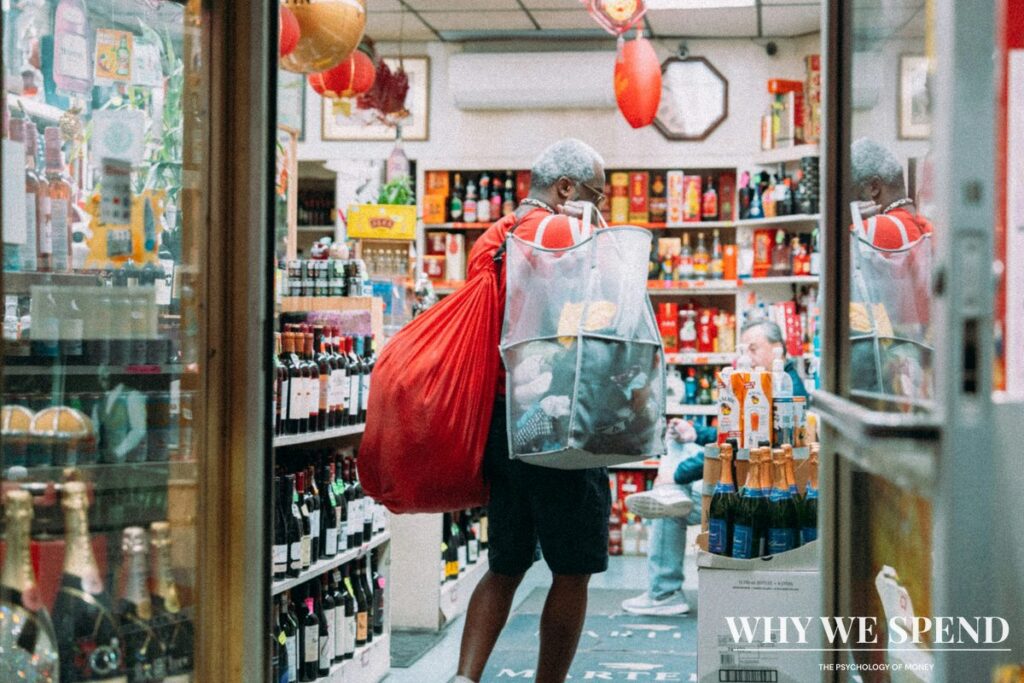
Simultaneously, certain categories see spending increases. Canned goods, rice, cooking oil, and other shelf-stable foods might accumulate in pantries. Some people boost emergency fund contributions or delay major purchases like property or vehicles, even when financially ready and despite no change in their actual income or job security.
Malaysian readers might recognise the instinct to fill up the petrol tank completely, even when prices haven’t changed, or to withdraw extra cash “just in case.” Singaporean readers might notice themselves checking CPF balances more frequently or reconsidering that renovation project, despite stable employment and solid finances.
The Paradox of Unchanged Circumstances
The most striking aspect of the wartime wallet reflex is that it occurs without corresponding changes to personal circumstances. The salary still comes in on schedule. Bills remain the same. Job security hasn’t shifted. Yet spending patterns transform as though preparing for scarcity that hasn’t arrived and statistically likely won’t.
This paradox reveals that spending decisions often have less to do with actual financial capacity and more to do with emotional state. Money represents safety and security in psychological terms, not just practical ones. When the world feels unsafe, holding onto money feels like holding onto security itself.
The Social Contagion Factor in the Wartime Wallet Reflex
Financial anxiety spreads through social networks like a virus. When colleagues at the office start discussing economic uncertainty over kopi, when family WhatsApp groups share articles about preparing for hard times, when friends cancel plans citing the need to “save money now,” these behaviours normalise and reinforce themselves.
In tight-knit communities common throughout Singapore and Malaysia, this social contagion accelerates rapidly. The kopitiam becomes a forum for economic anxiety. Parent chat groups discuss reducing enrichment classes. Neighbours mention postponing purchases. Each conversation adds weight to the idea that tightening belts is the sensible, responsible choice, regardless of individual financial health.
This creates a collective shift in spending behaviour that can have real economic consequences, even when based on distant threats rather than immediate danger. When enough people simultaneously reduce spending, businesses feel the impact, which can ironically create the economic difficulties people feared, despite the original trigger being geographically remote.
Distinguishing Prudent Planning from Anxiety-Driven Restriction
Not all spending adjustments during uncertain times stem from irrational anxiety. The challenge lies in distinguishing between prudent financial planning and anxiety-driven restriction that serves no practical purpose and potentially reduces quality of life unnecessarily.
Prudent planning involves concrete risk assessment. Questions like “Has my industry shown vulnerability to international conflicts?” or “Do supply chain disruptions affect essentials I rely on?” lead to specific, logical preparations. If working in import-export or tourism, adjusting spending makes sense. If employed in a stable sector with no exposure to conflict zones, dramatic cutbacks likely stem from emotion rather than necessity.
Anxiety-driven restriction feels urgent but vague. It manifests as a general sense that “everything could fall apart” without specific scenarios or timelines. It leads to blanket cuts across all spending categories without strategic thinking about what genuinely matters. It creates a scarcity mindset that colours all financial decisions with fear, even those unrelated to global events.
The Hidden Costs of Overcorrection
Overcorrecting spending in response to distant conflicts carries its own costs. Cancelling that long-planned family trip to Langkawi or postponing necessary dental work doesn’t just save money—it sacrifices experiences, health, and wellbeing. When these sacrifices stem from genuine need, they make sense. When driven by abstract anxiety about faraway events, they extract real costs for minimal benefit.
The psychological toll of constant restriction shouldn’t be underestimated either. Living in perpetual preparation mode creates stress, reduces joy, and can damage relationships when families disagree about the necessity of cuts. Children might internalise anxiety about money that shapes their adult relationship with finances long after the triggering conflict has resolved.
Practical Lessons: Managing the Wartime Wallet Reflex

Understanding the wartime wallet reflex allows for more intentional responses to global uncertainty. Several principles can help separate useful caution from counterproductive anxiety.
Lesson One: Audit Your Actual Risk Exposure
Before adjusting spending, conduct an honest assessment of actual exposure to the triggering event. Write down specific ways the distant conflict might materially affect income, essential expenses, or financial security. If the list remains vague or relies on multiple unlikely scenarios, the wartime wallet reflex likely exceeds actual risk.
Lesson Two: Limit Information Intake
Constant exposure to conflict coverage keeps anxiety elevated and the wartime wallet reflex activated. Set boundaries around news consumption. Check updates once or twice daily rather than continuously. This doesn’t mean ignorance, but rather preventing media saturation from distorting risk perception and spending behaviour.
Lesson Three: Distinguish Between Emergency Preparation and Anxiety Management
Building an emergency fund is wise regardless of global events. Keeping several months’ expenses accessible makes sense as general financial planning. But if suddenly doubling emergency fund targets or restricting all discretionary spending in response to distant conflicts, this crosses from preparation into anxiety management through financial restriction.
Lesson Four: Make Conscious Spending Decisions
Before cancelling plans or postponing purchases, ask: “Would I make this same decision if global news were less alarming?” If the answer is no, and personal circumstances haven’t changed, the decision likely stems from the wartime wallet reflex rather than genuine financial necessity.
Lesson Five: Recognise Social Contagion
Notice when spending changes come from conversations with others rather than personal risk assessment. Just because everyone at the office is discussing economic doom doesn’t mean it applies equally to all situations. Individual financial decisions should reflect individual circumstances, not collective anxiety.
Finding Balance During Uncertain Times
The wartime wallet reflex represents a natural human response to perceived threat. Recognising it doesn’t mean dismissing all financial caution during uncertain times, but rather ensuring that spending decisions align with actual circumstances rather than anxiety levels. For Singaporeans and Malaysians fortunate enough to live in stable, prosperous nations, the gap between perceived and actual risk during distant conflicts often runs wide.
The goal isn’t to spend recklessly during global crises or ignore genuine economic risks. Instead, it’s about making conscious, strategic financial decisions based on personal circumstances rather than reflexive restriction driven by events thousands of kilometres away. That might mean maintaining normal spending patterns when circumstances haven’t changed, or it might mean specific, targeted adjustments in genuinely affected areas. Either way, awareness of the wartime wallet reflex allows for choices based on reason rather than reflex, preserving both financial security and quality of life during uncertain times.