
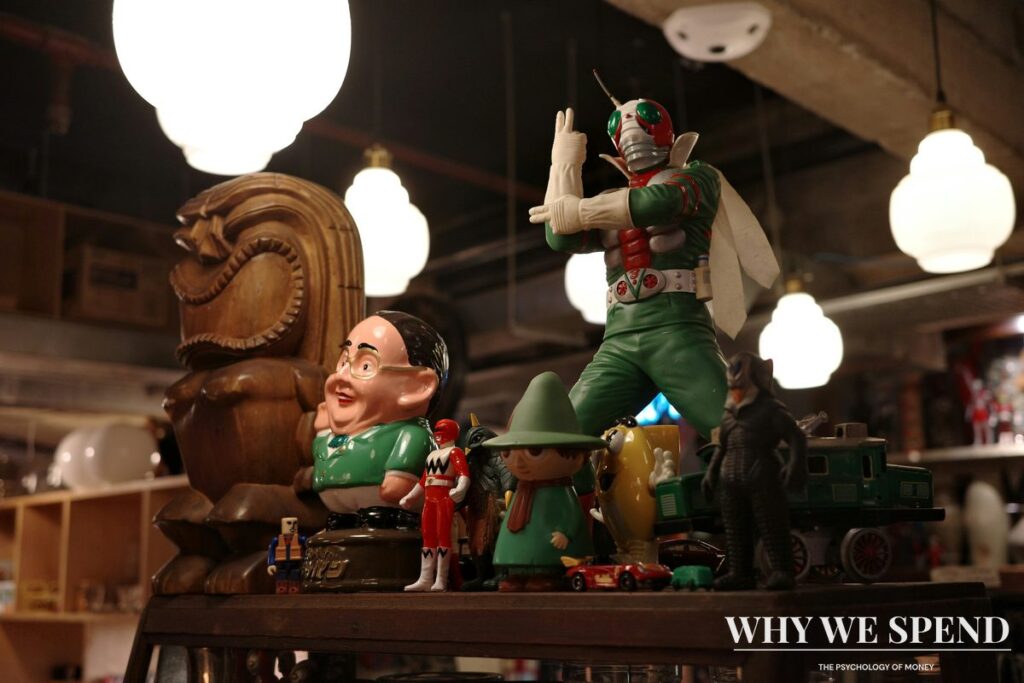
Why we spend on collectibles is rooted in a primal need to outlast our own mortality. When a Singaporean collector shells out $15,000 for a limited-edition Star Wars figurine still in its original packaging, or a Malaysian enthusiast drops RM8,000 on vintage sneakers that will never touch pavement, they’re not simply buying objects. They’re purchasing a piece of permanence in a world where everything else—careers, relationships, even memories—feels increasingly temporary.
The collectibles market has exploded across Southeast Asia. Trading cards, vintage toys, rare watches, sneakers, art prints—these aren’t just hobbies anymore. They’re serious financial commitments that can rival downpayment funds for a BTO flat or a car in KL. Understanding why we spend on collectibles reveals uncomfortable truths about how humans attempt to control time, create meaning, and leave behind proof that they existed.
The Immortality Project Hiding in Your IKEA Detolf
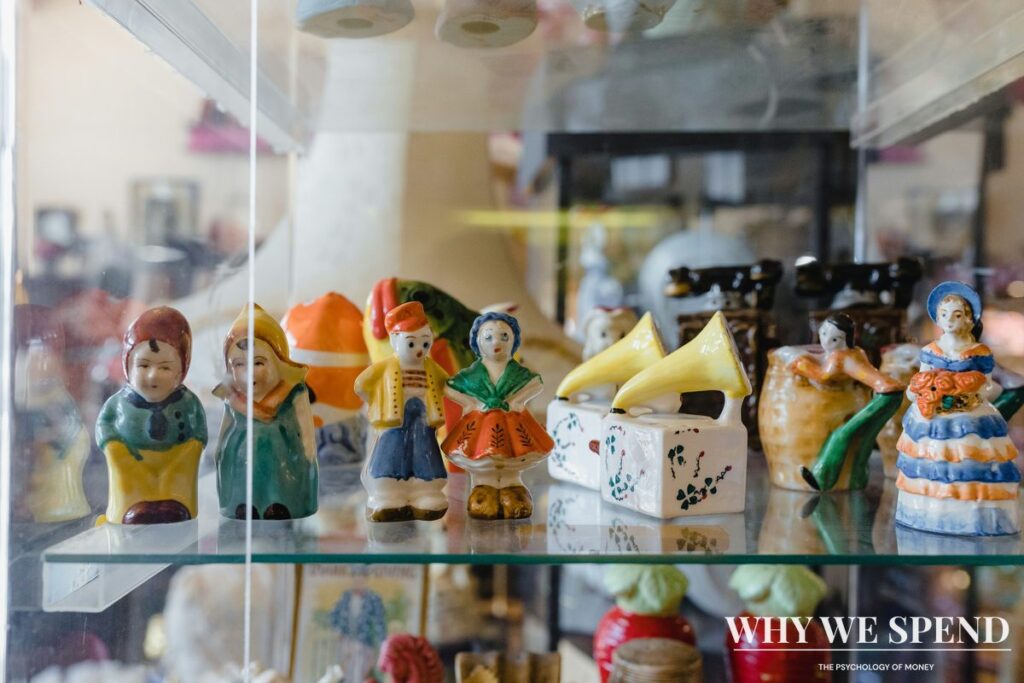
Psychologists call it “terror management theory”—the idea that humans engage in specific behaviours to cope with the knowledge that death is inevitable. Collectibles offer a tidy solution to this existential dread. A carefully curated collection suggests that someone took the time to choose, preserve, and protect something valuable. Long after that person is gone, the collection remains as evidence of their taste, their dedication, their very existence.
This explains why collectors often speak about their items in curatorial terms. “I’m preserving this for future generations,” they say, as if their wall of mint-condition PlayStation games constitutes a museum-worthy archive. The psychology here is both beautiful and tragic: humans trying to matter beyond their lifespan by attaching themselves to objects that might survive them.
In Singapore and Malaysia, where rapid development constantly erases the past—kampungs demolished for condos, old kopitiams replaced by franchise cafés—this desire to preserve takes on additional urgency. Collecting vintage Malaysian movie posters or old Singapore coins becomes an act of cultural resistance against forgetting.
Why We Spend on Collectibles Instead of Experiences

The standard financial advice says experiences trump possessions for happiness. Yet collectibles blur this line. They’re tangible objects that deliver experiential joy through hunting, acquiring, displaying, and sharing. This combination proves irresistible to the spending psychology of collectors.
Consider the dopamine cycle: spotting a rare item online, winning the bid, receiving the package, unboxing it with surgical precision, adding it to the display, photographing it for social media. Each step triggers reward centres in the brain. The object itself becomes less important than the ritual surrounding it.
For many Singaporean and Malaysian collectors, the thrill lies in the hunt across Carousell, browsing through dusty antique shops in Joo Chiat or Petaling Street, or connecting with international sellers on forums. These experiences create stories that collectors retell for years. The vintage Gundam model isn’t just plastic—it’s the weekend trip to Bangkok where it was discovered, the negotiation conducted in broken Thai, the careful transport home on the plane.
The Social Currency Factor
Collectibles also function as social capital. In collector communities, knowledge and possessions translate directly to status. Owning certain grails—those impossibly rare items every collector covets—grants immediate credibility and respect. This social dimension drives spending behaviour far beyond rational financial limits.
Someone might skimp on meals, delay upgrading their phone, or take the bus instead of Grab—all to afford the next addition to their collection. The external validation from fellow collectors provides more psychological satisfaction than material comfort. When another enthusiast recognises a rare piece at a meetup, that moment of acknowledgement validates not just the purchase, but the collector’s identity and expertise.
The Dangerous Logic of Investment Collecting
Many collectors justify their spending by framing purchases as investments. “These will only appreciate in value,” goes the reasoning. While some collectibles do increase in value, this investment narrative serves a psychological purpose beyond potential profit—it transforms spending into responsible financial planning.
This mental accounting trick allows collectors to bypass spending guilt. A $3,000 watch isn’t an indulgence; it’s an asset. Those limited-edition art prints aren’t frivolous; they’re portfolio diversification. The brain accepts this justification readily because it transforms pleasure-seeking into prudence.
The reality proves more complicated. Markets for collectibles can be volatile, illiquid, and prone to sudden shifts in taste. The Beanie Babies that seemed like retirement plans in the 1990s now gather dust in storage units. That limited-edition hypebeast collaboration might peak in value on release day, then decline steadily as hype fades and condition deteriorates.
More critically, viewing collectibles purely as investments removes the joy that makes collecting worthwhile. When every acquisition must appreciate, the hobby becomes another source of financial stress rather than an escape from it.
The Completion Trap and Spending Escalation
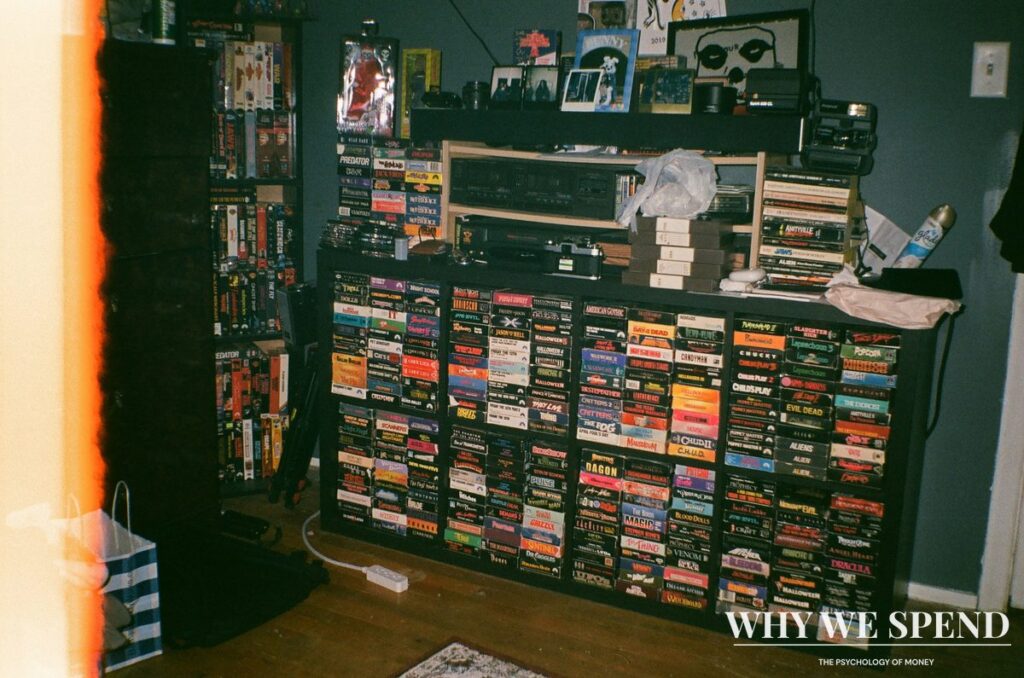
Collecting triggers the Zeigarnik effect—the psychological discomfort of incompletion that drives people to finish tasks. Once someone starts collecting a series, their brain craves closure. This explains why completing a set can lead to disproportionate spending on the final pieces.
Smart manufacturers exploit this tendency ruthlessly. Limited editions, regional exclusives, chase variants—these tactics transform casual buyers into compulsive completionists. A Singaporean collector might spend reasonable amounts on the first 20 figures in a series, then pay triple for the final exclusive piece just to achieve completion.
The trap deepens when one collection leads to another. After completing the main series, there are variants to collect. Then vintage versions. Then international releases. Then prototype samples. The goalposts keep shifting because the completion itself was never really the point—the pursuit was.
When Collecting Becomes Clutter
Many collectors eventually face a reckoning: their collection has outgrown their space, their budget, or their interest. What began as curated selection becomes overwhelming accumulation. The joy of each piece diminishes as the collection grows, yet stopping feels like abandonment of the identity they’ve built.
This is particularly acute in space-constrained Singapore, where HDB flats don’t accommodate unlimited expansion. Collectors rent storage units, stack boxes in their parents’ homes, or feel genuine anxiety about their possessions. The objects meant to provide control and meaning instead create stress and guilt.
Lessons: A Healthier Approach to Why We Spend on Collectibles
Understanding why we spend on collectibles doesn’t mean abandoning the hobby—it means approaching it more consciously. Several principles can help collectors avoid the psychological traps while maintaining the genuine joy of collecting.
Set absolute financial limits before emotional attachment forms. Decide what percentage of income can reasonably go toward collectibles, then enforce that boundary. This prevents the escalation where emotional investment overrides financial sense.
Question the investment narrative. If something only makes sense to buy because it might appreciate, that’s not collecting—it’s speculation with extra steps. Buy what brings genuine joy, not what might theoretically profit.
Embrace incompletion. Recognise that the discomfort of an incomplete set is manufactured psychology. A collection doesn’t need every variant to be meaningful. Sometimes the hunt matters more than the capture, and accepting that can prevent overspending on diminishing returns.
Schedule regular evaluations. Every six months, honestly assess whether the collection still serves its purpose. Does it bring joy, or has it become obligation? Are items displayed and appreciated, or hidden in boxes? This prevents collections from transforming into burdens.
Separate identity from possessions. The most dangerous aspect of collecting is when self-worth becomes tied to what someone owns. Knowledge, appreciation, and community matter more than completeness or rarity. A smaller, more focused collection often provides more satisfaction than comprehensive accumulation.
Account for total cost of ownership. Beyond purchase price, collectibles require storage, insurance, maintenance, and eventually disposal. Factor these hidden costs into spending decisions to avoid underestimating the true financial commitment.
Finding Meaning Beyond the Material
Why we spend on collectibles ultimately reflects a search for meaning in a transient world. The impulse itself isn’t flawed—humans have always created, preserved, and treasured objects. The challenge is maintaining perspective about what collectibles can and cannot provide.
They cannot truly grant immortality, no matter how carefully preserved. They cannot substitute for relationships, experiences, or personal growth. They cannot fill voids that require attention to deeper psychological needs. What collectibles can offer is genuine joy, community connection, aesthetic pleasure, and yes, a limited form of preservation—but only when approached with clear eyes and open hearts.
For Singaporean and Malaysian collectors navigating expensive hobbies in expensive cities, consciousness matters most. Collect what brings real joy, not what promises imaginary futures. Display what you love, not what you hope will impress. Preserve what has genuine meaning, not what you think should matter. The best collections aren’t the most complete or valuable—they’re the ones that reflect authentic passion without requiring financial sacrifice that undermines other life goals. That’s the real treasure worth preserving.